
Tiger’s Nest: What the Hike Actually Involves
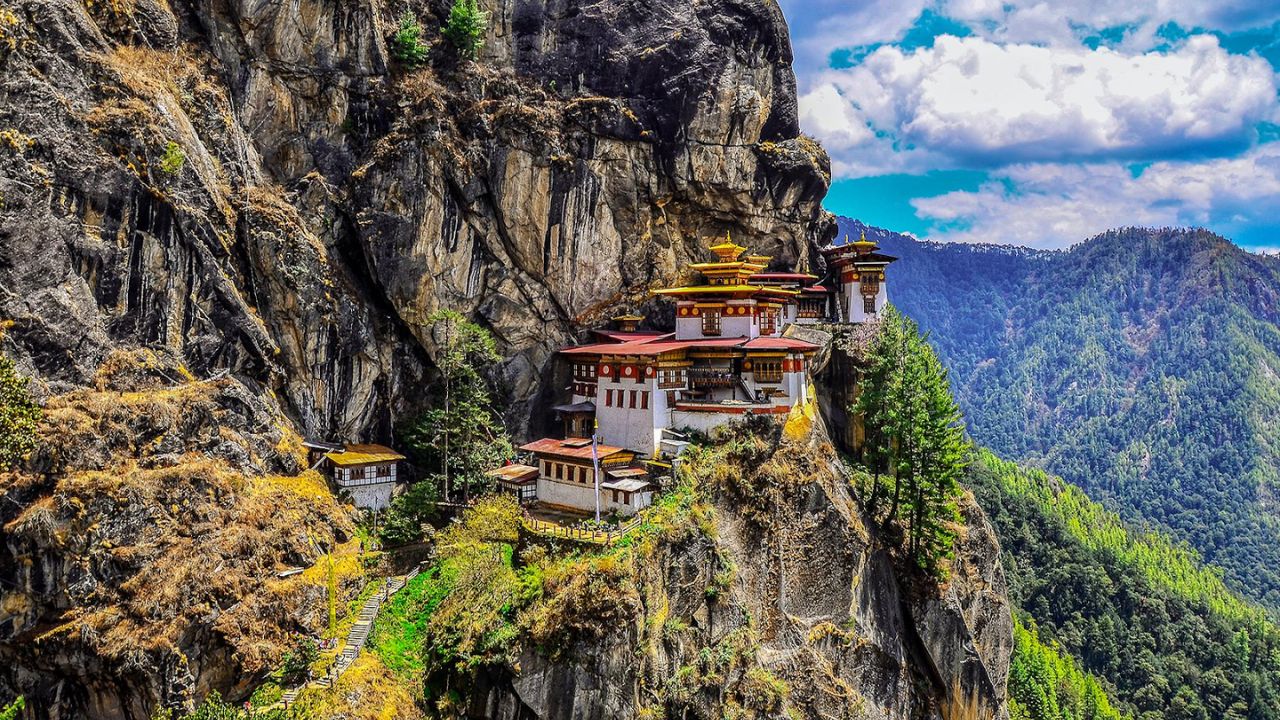
Tiger’s Nest, properly Taktsang Palphug Monastery, is the single image most guests associate with Bhutan before they have ever been, and it earns that reputation once you are standing beneath it. What gets less honest treatment online is what the visit actually asks of you. Here is the plain version.
What the hike actually is
The trailhead sits at roughly 2600 metres in the upper Paro valley. The monastery clings to a cliff face at around 3120 metres, which means a climb of about 500 vertical metres over a trail that runs a little under 3 kilometres each way. Most guests take two to three hours up and slightly less coming down, with the return trip, including time inside the monastery grounds, running four to five hours in total.
It is a real climb on a real trail, not a stroll. It is also entirely achievable for most guests in reasonable health, at a pace that allows for rest.
Is it too much for me
For most guests, no. We have walked guests from their twenties into their seventies up this trail. The path is well maintained, with a cafeteria roughly halfway that makes a natural rest point, and steps rather than scree for the steeper final stretch. What matters more than fitness in the gym sense is pace: guests who set off too fast in the thinner air struggle more than guests who walk slowly and stop often. Your guide will set that pace with you, not for you.
If mobility is a genuine concern, say so when we are planning your journey rather than discovering it on the trail. We would rather adjust the day in advance than have you turn back partway.
The horse option
Horses are available from the trailhead up to the cafeteria, roughly the halfway point, for guests who want to save their legs for the steeper second half or who have a knee or hip that makes the lower gradient the harder part. From the cafeteria, the final climb to the monastery itself is on foot only, on stairs too narrow and steep for an animal. Ask your guide to arrange this in advance rather than on the morning of.
Timing your visit
Early morning is best, both for light and for fewer guests on the trail. We often place this climb toward the end of a journey rather than the beginning, so a few days at Bhutan’s more moderate altitudes come first, and the trip closes on its most demanding, most rewarding morning. If your fitness or your schedule calls for the opposite order, tell us and we will build the days around it instead.
Once you are inside
Photography is not permitted inside the temple rooms themselves, out of respect for what is kept there rather than any bureaucratic rule. Shoulders and knees stay covered, hats and shoes come off before entering. The courtyards and the cliff face itself, where most guests take their photographs, are unrestricted.
What to bring
Layers, since the trailhead and the monastery sit at different temperatures and you will be moving between shade and open sun. Good, already broken in walking shoes rather than anything new. Water, though the cafeteria sells more partway up. A light rain layer outside the driest months.
More from the Journal
A few other notes in this same quiet vein.
Let this be your starting point.
If something in this note resonated, tell us. We will design a private journey around the feeling you are seeking.
Plan your private journey