Thimphu Tshechu
Three days of mask dance in the kingdom's capital, and the city that holds still around them.
Why we created this journey
Every journey we design starts with a question rather than an itinerary. What is the one thing about this part of Bhutan that someone should understand before they leave? The places and the days follow from that question, not the other way around.
We do not build journeys by stringing together famous sights. We build them by thinking about who the traveller is, what they will notice, and what they will carry home with them. That takes longer. We think it is worth it.
Moments you may remember
- Watching first light reach the valley before anyone else is awake
- A conversation that runs longer than the meal
- An afternoon with nowhere particular to be
- The sound of a river you did not know you needed to hear
- A handwritten postcard arriving after you have returned home
This journey may suit you if
- You prefer a few places experienced well over many places ticked off
- You are more interested in how people live than in how many temples you visit
- You value time and space in your travels
- You do not want to change hotels every night
- You are comfortable at a slower pace and find that pace more rewarding
From USD 350 per person per day for groups of 2, fully inclusive of accommodation, private vehicle and licensed guide, all meals, permits, SDF, and 24-hour support. Rates are tailored to your group. Customised to fit you.
Highlights of this journey
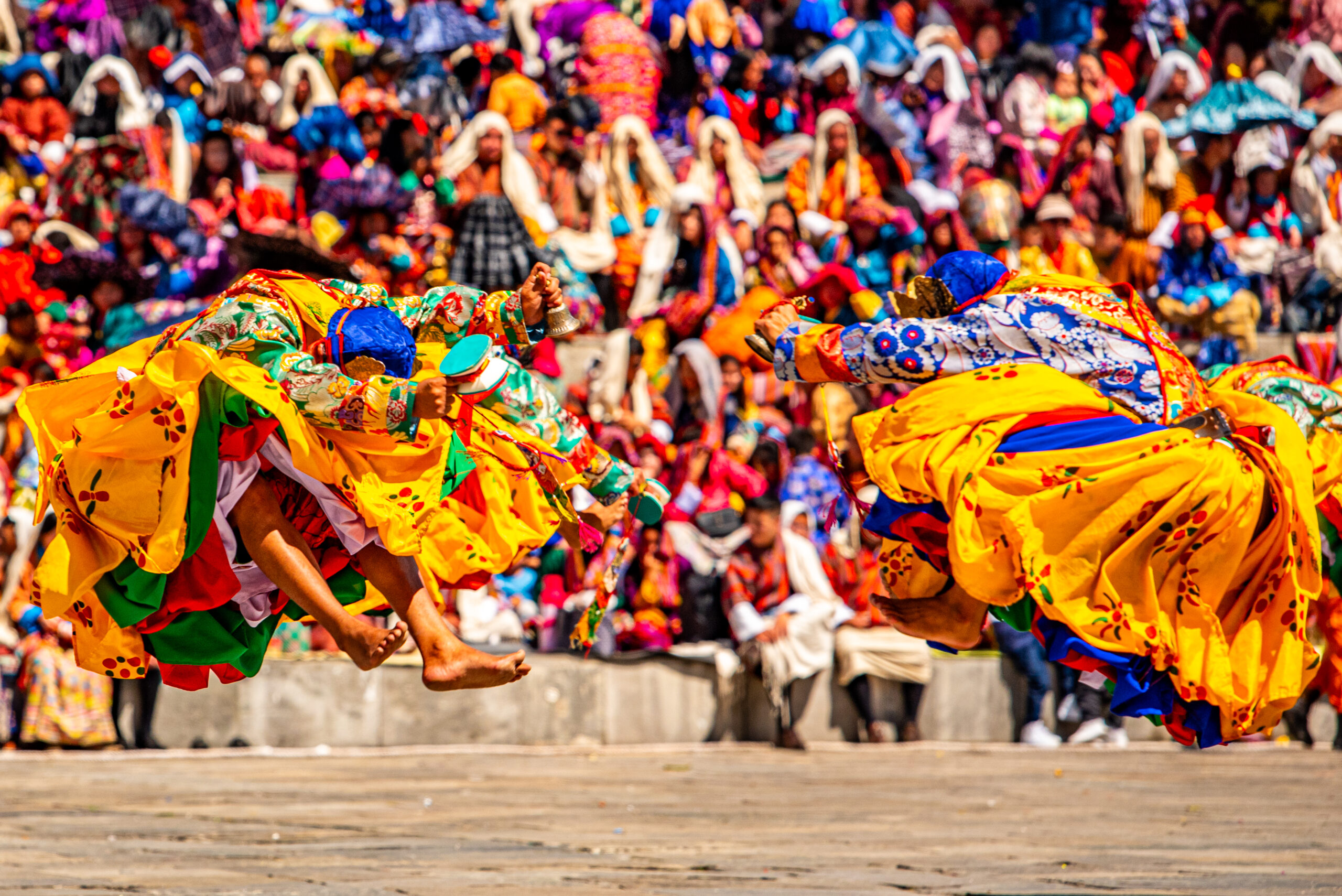
- Three mornings at Tashichho Dzong during the Thimphu Tshechu — the largest festival in the kingdom's capital, attended by the whole city
- The Institute for Zorig Chusum: young Bhutanese learning to paint thangkas, cast bronze, and weave the traditional patterns — the living transmission of the thirteen arts
- Punakha Dzong at the river confluence, one night away from the capital — the counterpoint that makes both dzongs more visible
- The National Memorial Chorten at first light, before the city wakes — a place of daily pilgrimage that tells you how Bhutanese people begin their days
- Thimphu's weekend market: the valley's farmers, the city's residents, and the goods moving between them on a Saturday morning
- The dzong courtyard in the quiet after the festival — monks returning to their routines, the space becoming itself again
Sample itineraries
-
Day 1 Arrive Paro. Thimphu by evening.
Land at Paro International Airport on the morning Drukair flight. Our team meets you at the gate and we drive east along the Wang Chhu river to Thimphu — roughly one hour. Check in to the hotel. Late afternoon walk around the Memorial Chorten area to orient yourself in the city. Dinner in Thimphu.
-
Day 2 Thimphu. The city before the festival.
A full day in the capital before the tshechu begins. We start at the National Memorial Chorten, then the Institute for Zorig Chusum, where young Bhutanese train in the thirteen traditional arts over a four-year programme: thangka painting, bronze casting, wood carving, weaving. The students are there on a weekday morning and the classrooms are open to visitors who observe without disrupting. Lunch in a local restaurant in Thimphu. Afternoon at the weekend market if this falls on a Saturday, or free time in the city if not. Dinner at the hotel.
-
Day 3 Tashichho Dzong area. The day before it begins.
In the late afternoon the dzong is already changing. Monks are arranging the altar furniture in the main courtyard; families arrive from the eastern districts and set up camp on the hillside above the walls. We walk the perimeter of the dzong in the afternoon light — the Wang Chhu below the western wall, the prayer flags on the ridge above — and visit the Folk Heritage Museum nearby, which gives the festival context it is hard to find anywhere else. Dinner early so you are rested for the first morning.
-
Day 4 First morning of the Tshechu. Tashichho Dzong.
We arrive at the dzong before the gates open. The courtyard at Tashichho is larger than Paro or Punakha and the opening morning has a particular quality — the whole city seems to have arrived at once. Our guide has arranged a position with clear sight lines to the main arena. The opening dances include the Black Hat Dance and the Drum Dance from Dramitse, the latter a UNESCO-recognised tradition performed by monks who learned it as boys. We stay through midday. Lunch in Thimphu, then free afternoon — your guide is available but not mandatory.
-
Day 5 Second morning of the Tshechu. Afternoon in the city.
Back to the dzong in the morning. Today the Raksha Mangcham — the Dance of the Judgement of the Dead — is performed. A large cast, elaborate costumes, and a narrative structure that makes it more readable than most cham dances if you know the story beforehand: your guide will brief you at breakfast. We leave by midday. A free afternoon in Thimphu — the city is unusually alive during the festival, with street food, visiting monks from other dzongs, and the kind of accidental conversations that happen when an entire country is in one place.
-
Day 6 Third morning of the Tshechu. Thimphu to Punakha.
The final morning of the festival. We attend the closing dances and the blessing ceremony at the dzong, then drive to Punakha in the afternoon — over the Dochu La pass, the 108 chortens on the ridge, the Himalayan peaks north of the cloud line on a clear September day, and down into the valley. Punakha is warmer than Thimphu; the light is different. Dinner by the Mo Chhu river.
-
Day 7 Punakha. The river dzong in the quiet.
A single day at Punakha Dzong — the most beautiful dzong in Bhutan, at the confluence of the Mo Chhu and Pho Chhu rivers. No festival, no crowds; just the monastery functioning as a monastery. We cross the cantilever bridge over the river and walk through the courtyards in the morning. Your guide can take you through rooms that are closed during the Punakha Tshechu. Lunch in the valley, then a boat trip up the Mo Chhu to a weaving village — the same river, slower. Dinner by the water.
-
Day 8 Punakha to Paro. Return through Thimphu.
We drive back over the Dochu La and through Thimphu to Paro in the morning. A lunch stop in Thimphu — the city feels quieter now that the festival is over; the monks are back in the dzong, the streets are less full. Then west along the Wang Chhu to Paro. Check in to the hotel by late afternoon. Last dinner in the valley.
-
Day 9 Depart Paro.
Breakfast at the hotel. Our team drives you to Paro International Airport for your morning flight. We send a postcard from Thimphu after you leave.
-
Day 1 Arrive Paro. Thimphu by evening.
Land at Paro on the morning flight. Our team meets you and we drive east to Thimphu, one hour along the Wang Chhu river valley. Check in, short walk around the Memorial Chorten area. Dinner in Thimphu.
-
Day 2 Thimphu. The city before the festival.
First light at the National Memorial Chorten. Then the Institute for Zorig Chusum — four-year training in the thirteen traditional arts, classrooms open and working. Lunch in the city. Afternoon at the weekend market if the day falls right. Dinner at the hotel.
-
Day 3 Tashichho Dzong area. The day before it begins.
Afternoon walk around the dzong perimeter — the Wang Chhu below the western wall, the prayer flags on the ridge above, families arriving from the eastern districts. Visit the Folk Heritage Museum for context. Early dinner.
-
Day 4 First morning of the Tshechu. Tashichho Dzong.
Arrive before the gates open. Good position in the courtyard for the Black Hat Dance and the Drum Dance from Dramitse. Stay through midday. Free afternoon.
-
Day 5 Second morning of the Tshechu. Afternoon in the city.
The Raksha Mangcham — the Dance of the Judgement of the Dead — briefed at breakfast, then watched in the courtyard. Leave by midday. Free afternoon in the festival city.
-
Day 6 Third morning of the Tshechu. Thimphu to Punakha.
Closing dances and blessing ceremony at the dzong, then drive over the Dochu La to Punakha. The 108 chortens on the ridge, the valley opening below. Dinner by the Mo Chhu.
-
Day 7 Punakha. The river dzong in the quiet.
Cross the cantilever bridge and spend the morning in Punakha Dzong with no festival crowds — rooms accessible, courtyards quiet. Lunch in the valley, then a boat trip up the Mo Chhu. Dinner by the water.
-
Day 8 Punakha to Paro. Return through Thimphu.
Drive over the Dochu La and through Thimphu to Paro. Lunch stop in the capital — quieter now, the festival over. Check in to the Paro hotel by late afternoon. Last dinner in the valley.
-
Day 9 Depart Paro.
Breakfast at the hotel. Our team drives you to Paro International Airport. We send a postcard from Thimphu after you leave.
What is included
All accommodation, on the basis described per day
Private vehicle and licensed driver throughout
Licensed Bhutanese guide throughout
All meals (breakfast, lunch, dinner)
All permits and entry fees, including festival entry
Sustainable Development Fee (SDF)
24-hour in-country support
What is not included
International flights to Paro
Visa fee (USD 40)
Travel insurance
Personal expenses, tipping, drinks at meals
Optional experiences (browse and add to your wishlist)
What your journey gives back.
Bhutan is a carbon negative kingdom, where more than 70 percent of the land is covered in forests and the rivers remain clean and alive. The Sustainable Development Fee supports free healthcare, free education, and the protection of this extraordinary place.
This is not a tax. It is a shared commitment to preserve Bhutan for every generation that follows.
By visiting, you are not a tourist. You are a co-guardian of this kingdom.
Ready when you are.
Tell us roughly when you would like to come and how many you are. Our team in Thimphu will reply personally within 24 hours.
Plan this journey with our team