Best Time to Visit Bhutan: A Season by Season Guide
There is no single best month to visit Bhutan. There is a best month for clear mountain views, a different one for festivals, another for a valley with nobody else in it. Guests usually ask us the question expecting one answer. We would rather give an honest one.
Spring: March to May
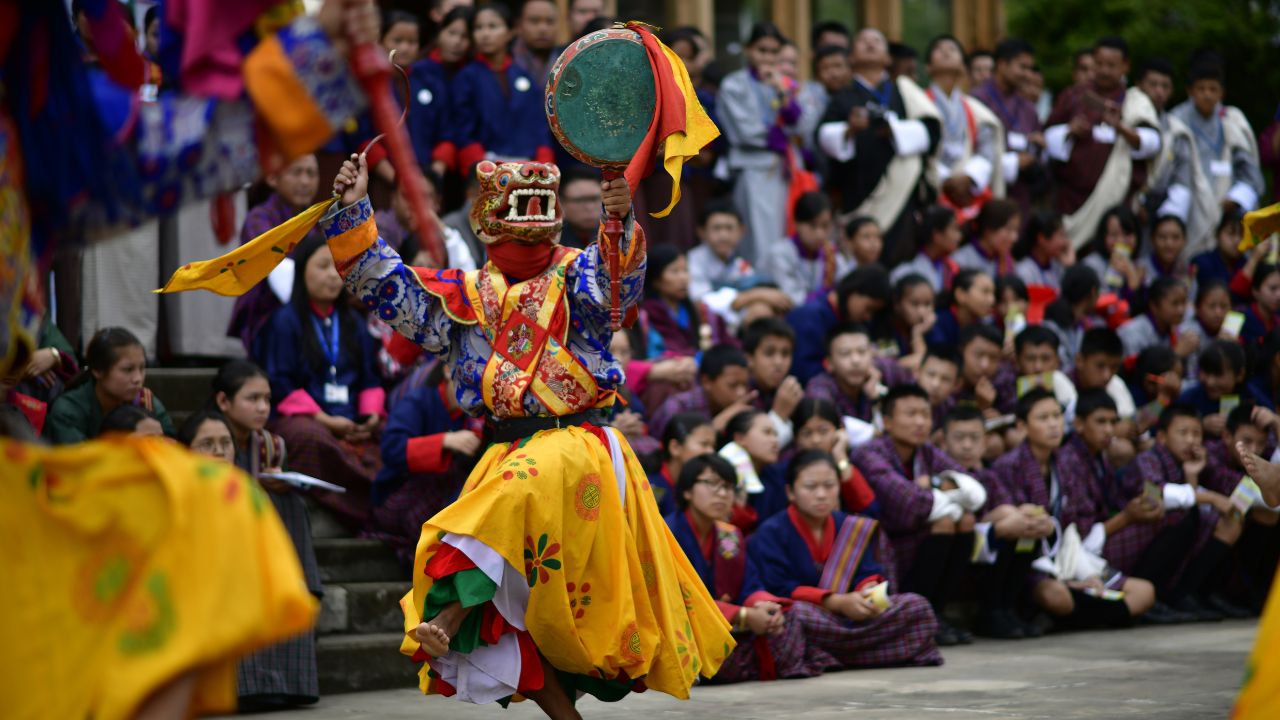
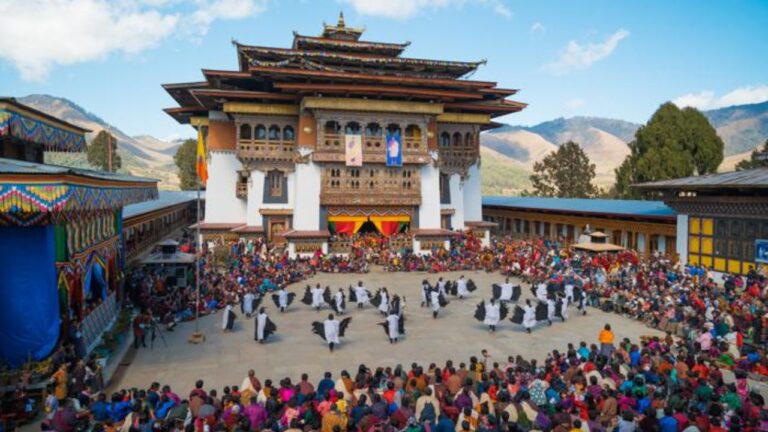
Spring is when Bhutan’s skies clear properly after winter, and the rhododendrons that cover entire hillsides in the higher valleys come into bloom, usually peaking in April. Paro Tshechu, one of the two largest festivals in the country, falls in spring most years, filling the dzong courtyard with masked dancers and the whole valley’s families. Days are mild, mornings still carry a chill, and this is a strong window for trekking before the monsoon arrives.
If your reason for coming is mountain views and colour on the hillsides, spring earns its reputation.
Autumn: late September to November
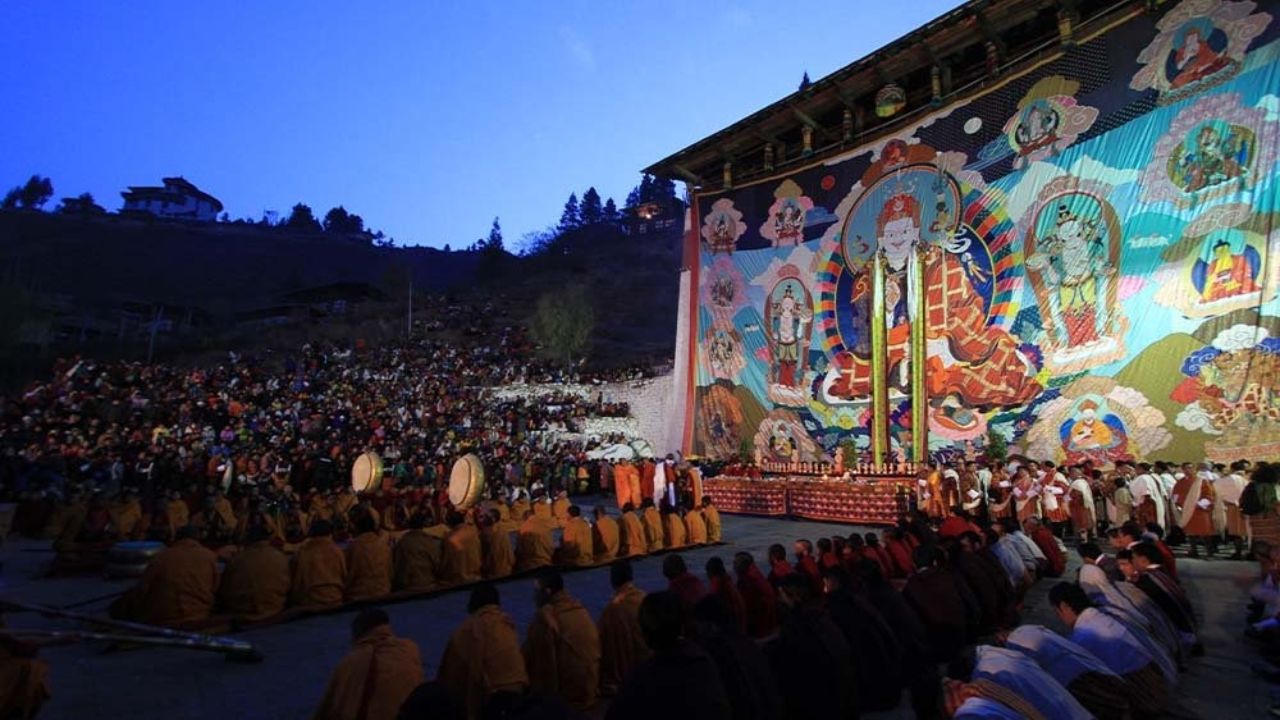
Autumn is Bhutan’s clearest season and its busiest. Skies hold their clarity for weeks at a stretch, the Himalaya stands sharp on the horizon from Paro and Punakha, and Thimphu Tshechu, the largest festival in the kingdom, draws crowds from every district in late September or October. This is also when the roads and the better stays fill up first, so if autumn is your window, plan further ahead than you would for any other season.
If your reason for coming is festivals, the clearest possible mountain views, or simply the classic postcard version of Bhutan, autumn is it, and you should expect to share it with more guests than any other time of year.
Winter: December to February
Winter in the valleys Paro, Thimphu, Punakha stays cold in the mornings but rarely severe, and the skies are often at their sharpest, since there is less haze than the warmer months carry. Higher valleys and passes turn properly cold and can close briefly after snow. What winter offers in return is quiet: fewer guests, easier access to the best stays and guides, and a kingdom that feels closer to how it actually lives day to day rather than how it looks mid festival. Phobjikha valley is at its best in winter, when the black necked cranes arrive from the Tibetan plateau to spend the season in its fields.
If your reason for coming is stillness rather than spectacle, winter is worth serious consideration, and it is when we send guests who tell us they want Bhutan without the queue.
Monsoon: June to August
Monsoon brings rain to the lower and western valleys, heaviest in the south, and makes trekking above 3000 metres genuinely difficult with swollen rivers and slippery trails. Central and eastern Bhutan see less rain than the west and stay more workable. This is our quietest season by a wide margin. The valleys turn intensely green, the rice terraces fill, and a guest who wants Bhutan without another traveller in sight will find it here, provided the itinerary is built around the weather rather than against it.
If festivals are the reason you are going
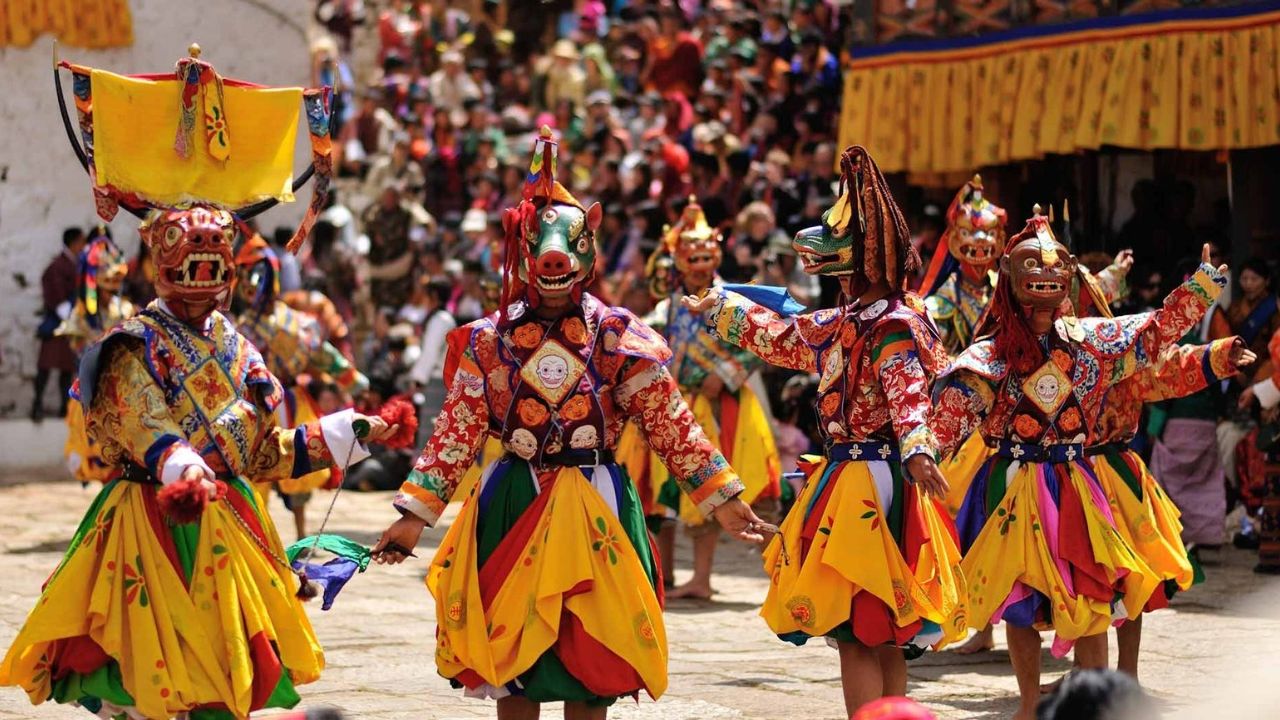
Bhutan’s festival calendar runs nearly year round, but the two largest, Paro Tshechu in spring and Thimphu Tshechu in autumn, draw the biggest crowds and the most elaborate mask dances. Smaller festivals across the calendar, Punakha Drubchen, Jambay Lhakhang Drup in Bumthang, and dozens of district level tshechus, offer the same colour with a fraction of the crowd. The full calendar, with both this year’s and next year’s dates, lives on our Festival Dates page. Tell us which pulls you, spectacle or intimacy, and we will time the rest of your journey around it.
If you are travelling with family
Bhutan’s pace suits children better than a country that demands constant movement, and the milder shoulder seasons, spring and early autumn, are usually the easiest windows for a family itinerary: comfortable temperatures, manageable walking, and festivals that hold a child’s attention in a way a quiet monastery interior sometimes does not. We pace family journeys deliberately slower than a couple’s or solo itinerary, with more time built into each day than the map distance suggests you need.
The honest summary
Spring and autumn are Bhutan at its most photogenic and most visited. Winter and monsoon are Bhutan at its quietest, each with a real, specific appeal rather than simply being the leftover months. There is no wrong season, only a season that matches what you are actually looking for. Tell us what that is, and we will build your dates around it rather than the other way round.
More from the Journal
A few other notes in this same quiet vein.
Let this be your starting point.
If something in this note resonated, tell us. We will design a private journey around the feeling you are seeking.
Plan your private journey