How Many Days Do You Actually Need in Bhutan?
This is the question we are asked most often, right after what it costs. The honest answer is that it depends on what you came for. So rather than give you a number, here is what each length actually buys, using our own journeys as the examples.
One thing first, because it changes the arithmetic. Every length below runs from the day you land in Paro to the day you fly out. Bhutan has one international airport, most flights arrive and leave in the morning, and the drive from Paro to Thimphu takes ninety minutes. So a seven day journey means seven days here, with the first and last of them real days rather than airport days. When you compare us with anyone else, check whether they are counting the same way.
Four to five days
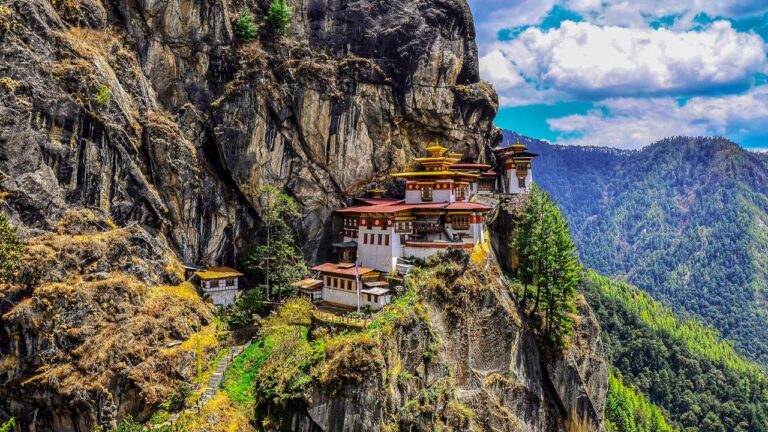
One journey sits here. Bumdra Trek with Glamping stays in the Paro valley and puts you on the Bumdra ridge at 3,800 metres for a night, with proper bedding and a hot dinner at the camp. You come down at dawn through Tiger’s Nest, which is the only way to see it with nobody else on the path.
This is the right length if Bhutan is one stop inside a longer regional trip and you would rather have one strong experience than a thin circuit. Shorter than this is not worth the flight, and we will say so.
Six to eight days: the first visit, and the festivals
Most people coming for the first time land in this range, and it is genuinely enough for two valleys done properly.
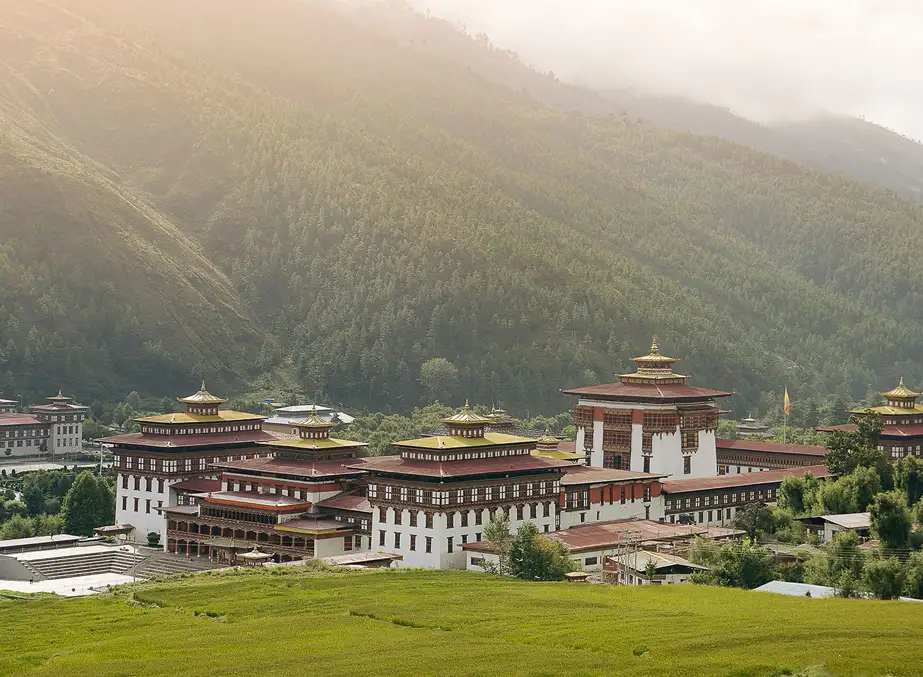
Glimpse of Bhutan runs six to eight days. At six it covers Paro and Thimphu; at eight it crosses the Dochu La to Punakha and the river dzong.
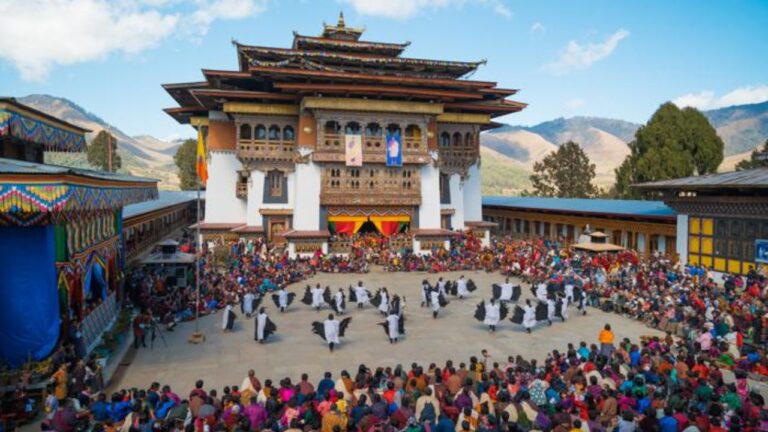
Three festivals also fall here, and their dates are set by the lunar calendar rather than by you. Druk Wangyel Tshechu is six days across Thimphu and Punakha, a winter tshechu danced at 3,116 metres with the eastern range standing behind the stage. Punakha Drubchen and Tshechu is seven days and reaches all three western valleys, which makes it the shortest journey we run that does. The Drubchen re enacts a four hundred year old battle, in the courtyard where it was won. Paro Tshechu is eight days, built so two unhurried days settle you into the valley before the dances begin, and so the Thongdrel unfurling before dawn has a day of its own.
If you have a week, this is what a week buys. Paro and Thimphu without hurrying, or all three western valleys if you accept that the last two days will feel quick.
Seven to nine days: walking between the valleys
Two treks sit here, and neither needs mountaineering experience. They are long walking days at moderate altitude rather than expeditions.
Druk Path Trek takes seven to nine days and walks the old high route from Paro to Thimphu instead of driving the road between them, camping beside lakes that have no roads to them. Dagala Thousand Lakes Trek is seven to eight days out of Thimphu and stays above 4,000 metres for three of them, among glacial lakes that most Bhutanese have never seen.
Eight to eleven days: higher, or deeper into one idea
Past eight days the question stops being how long and becomes what shape. These journeys spend the extra time going up, or following one thread rather than covering more ground.
Two go high. Jomolhari Trek is nine to eleven days from the Paro valley to Jangothang at 4,080 metres, camped beneath a mountain that has never been climbed and is not permitted to be. Royal Highland Festival takes nine to eleven days and walks in to Laya at 3,820 metres, in Gasa, for the only festival in Bhutan held above the treeline.
Four follow a thread. Botanical Bhutan runs eight to ten days in three seasonal versions, built around rhododendrons in April, the blue poppy at Chelela in June, or the Rhododendron Festival in Haa. The GNH Journey is eight to ten days and treats Gross National Happiness as government policy rather than as a phrase, including a morning at the commission that measures it. In the Footsteps of Drukpa Kunley takes eight to eleven days and follows the fifteenth century monk who drank too much, loved freely, and is still the most beloved saint in the country. Thimphu Tshechu is a fixed nine days, three mornings of mask dance in the capital and then the quiet of Punakha afterwards.
Nine to twelve days: the unhurried circuit
This is where a trip stops feeling like a route and starts feeling like a place you stayed.
Slow Bhutan is built for exactly this, nine to twelve days with afternoons deliberately left open. At nine it covers the three western valleys; at twelve it crosses the Pelela to Trongsa, Bumthang and the crane valley at Phobjikha. Happiness Bhutan runs ten to twelve days and adds Bumthang at the longer length. Modern and Medieval Bhutan takes the same ten to twelve days and goes furthest east of any of our cultural journeys, north into the gorge to Lhuentse and its weavers.
Twenty eight days
One journey, and it is not a longer holiday. The Snowman Trek runs from Paro to Bumthang through Gasa, Laya and Lunana, crossing seven passes above 4,500 metres, the highest of them Thampe La at 5,320. Twenty one of those days are walking days. It needs a serious trekking background and a month you can genuinely give it.
So, how many days
With a week you can see Paro and Thimphu well, or stretch to Punakha and accept feeling rushed at the end. With ten days to two weeks you can do the three western valleys properly, with real afternoons rather than transit time disguised as sightseeing. Beyond two weeks you are no longer choosing between valleys. You are choosing between depth in the west and reaching further east, into Trongsa, Bumthang and Lhuentse, which most people who come once never see.
We would rather tell you which of our journeys fits the time you have than sell you the longest one. If you are not sure, tell us roughly how many days you can spare and what you most want to feel, and we will tell you which of the above actually fits.
More from the Journal
A few other notes in this same quiet vein.
Let this be your starting point.
If something in this note resonated, tell us. We will design a private journey around the feeling you are seeking.
Plan your private journey