Happiness Bhutan
A private journey through the culture that built the idea of Gross National Happiness.
Why we created this journey
Every journey we design starts with a question rather than an itinerary. What is the one thing about this part of Bhutan that someone should understand before they leave? The places and the days follow from that question, not the other way around.
We do not build journeys by stringing together famous sights. We build them by thinking about who the traveller is, what they will notice, and what they will carry home with them. That takes longer. We think it is worth it.
Moments you may remember
- Watching first light reach the valley before anyone else is awake
- A conversation that runs longer than the meal
- An afternoon with nowhere particular to be
- The sound of a river you did not know you needed to hear
- A handwritten postcard arriving after you have returned home
This journey may suit you if
- You prefer a few places experienced well over many places ticked off
- You are more interested in how people live than in how many temples you visit
- You value time and space in your travels
- You do not want to change hotels every night
- You are comfortable at a slower pace and find that pace more rewarding
From USD 350 per person per day for groups of 2, fully inclusive of accommodation, private vehicle and licensed guide, all meals, permits, SDF, and 24-hour support. Rates are tailored to your group. Customised to fit you.
Highlights of this journey
- The Punakha Dzong at the confluence of two rivers — a fortress and a monastery and one of the most beautiful buildings in Asia
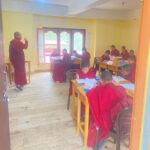
- A working morning at the Institute for Zorig Chusum watching students learn traditional arts — thangka painting, wood carving, embroidery
- The hanging bridge above Punakha valley — an hour of quiet walking above the Mo Chhu river
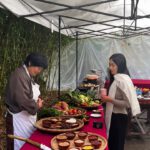
- A farmhouse lunch with a Bhutanese family in the Punakha valley
- Tiger's Nest at dawn on the final morning — the 900-metre cliff, the silence, the view
- The farmers' market in Thimphu on a weekend morning — the kingdom in one place
- Bumthang (deeper variation) — four valleys, ancient temples, and a pace that belongs to a different century
Sample itineraries
-
Day 1 Arrive Paro. Drive to Thimphu.
Land at Paro International Airport on the morning Drukair flight. Our guide meets you at the gate. The drive to Thimphu takes about an hour through the Paro valley and up through the river gorge. You will see the scale of the place before you see the capital: forested hills, a two-lane road following the Wang Chhu, farmhouses painted with the eight auspicious symbols. Check in at the hotel. Quiet afternoon. Dinner in Thimphu.
-
Day 2 Thimphu. The present tense.
The National Memorial Chorten in the morning — built in 1974 in memory of the third king and still the most visited place of daily worship in Thimphu. Elderly citizens walk circuits at dawn and dusk, prayer wheels turning. We watch without intruding. Then the Institute for Zorig Chusum: a government school teaching the thirteen traditional arts of Bhutan. We spend an hour watching students in the thangka painting and wood carving studios — young people learning the same techniques that decorated the dzongs four hundred years ago. Lunch near Norzin Lam. Afternoon at the farmers' market if it is a weekend, or a walk through the lower town if not. Dinner at the hotel.
-
Day 3 Thimphu. What Gross National Happiness actually means.
A morning at the National Library, some of them centuries old, held in a building designed to look like a traditional monastery. The scholars come here to study texts in Dzongkha and Choekey. We spend an hour with a librarian who will explain what the collection holds and what it is for. After lunch, a drive to the Tashichho Dzong — the seat of government and the summer residence of the Je Khenpo, the chief abbot. The dzong is open to visitors in the afternoon; the monks' quarters and the government offices are separated by the courtyard in a spatial arrangement that reflects the dual system of governance Bhutan has practiced since the seventeenth century. Dinner at the hotel.
-
Day 4 Drive to Punakha. The winter capital.
The drive from Thimphu to Punakha crosses the Dochula Pass at 3,100 metres. On a clear morning the 108 memorial chortens stand against the white peaks of the Himalaya and the view north goes as far as Gangkhar Puensum, the highest unclimbed mountain in the world. We stop for tea at the pass. The descent into Punakha is a drop of nearly a thousand metres in thirty minutes — the temperature rises, the vegetation thickens, banana trees appear at the roadside. Punakha is a warm valley and it grows rice twice a year. Afternoon check-in and a walk along the riverbank before dinner.
-
Day 5 Punakha Dzong. The hanging bridge.
Punakha Dzong in the morning, at the confluence of the Pho Chhu and Mo Chhu rivers, a position chosen deliberately so that both the rivers flow past the dzong walls and around the peninsula. It was the seat of the Bhutanese government until 1955 and is still the winter residence of the Je Khenpo. The assembly hall holds the embalmed body of Zhabdrung Ngawang Namgyal, the monk-ruler who unified Bhutan in the seventeenth century. We spend an unhurried hour inside. After lunch, we walk the suspension bridge over the Mo Chhu — a 160-metre wooden bridge swaying gently above the turquoise river — and continue into the valley on the far side. No destination, just the walk. Dinner at the hotel.
-
Day 6 Punakha valley. Lunch with a family.
A morning at leisure — the hotel terrace overlooks the river and most guests find it harder to leave than expected. Late morning, a drive into the upper Punakha valley to visit Khamsum Yulley Namgyal Chorten, a four-storey temple on a ridge above the paddy fields built in 1999. The climb takes thirty minutes through terraced rice fields; the view from the top takes in the whole valley. Lunch at a farmhouse below the chorten with a family who have farmed this land for three generations. They will cook what is in season — red rice, dried beef, fresh chillies and local cheese if you can manage the heat, orchards fruit if you cannot. Back to the hotel for a quiet afternoon.
-
Day 7 Drive to Paro. The valley opens.
The drive back from Punakha retraces the Dochula Pass and descends into the Thimphu valley before turning west toward Paro. We stop in Thimphu for lunch and an hour in the town, then continue to Paro in the early afternoon. The Paro valley is broader and drier than Punakha — the light is different here, flatter and more silver. Check in to the hotel. Dinner in the valley.
-
Day 8 Tiger's Nest. The climb.
We start at first light. The hike to Taktsang Monastery — Tiger's Nest — is three hours up at a measured pace, through blue pine and rhododendron, with the monastery appearing intermittently above through the tree line, closer each time. The monastery is built directly into a vertical cliff at 3,120 metres; the cave inside it is where Guru Rinpoche meditated for three months in the eighth century. We spend an hour inside, then begin the descent. Lunch at a farmhouse below the trail. Long slow afternoon at the hotel.
-
Day 9 Paro valley. The unhurried close.
A day with no fixed schedule. Options we can arrange: Rinpung Dzong and the National Museum in the watchtower above it; a walk through Paro town to the weekend market; a visit to Kyichu Lhakhang, one of the 108 temples built in a single day by the Tibetan emperor Songtsen Gampo in the seventh century; or no plan at all and a morning on the hotel terrace. The afternoon is yours. Dinner at the hotel together.
-
Day 10 Depart Paro.
Breakfast at the hotel. Our guide and driver bring you to Paro International Airport for your morning flight. We send a postcard from Thimphu after you leave — it arrives in about three weeks.
-
Day 1 Arrive Paro. Drive to Thimphu.
Land at Paro on the morning flight. Our guide meets you at the gate. The drive to Thimphu takes an hour through the river gorge. Check in at the hotel. Quiet afternoon. Dinner in Thimphu.
-
Day 2 Thimphu. The present tense.
The National Memorial Chorten, then the Institute for Zorig Chusum — an hour watching students in the thangka painting and wood carving studios. Lunch near Norzin Lam. Afternoon at the farmers' market or a walk through the lower town. Dinner at the hotel.
-
Day 3 Thimphu. What Gross National Happiness actually means.
The National Library in the morning, then the Tashichho Dzong in the afternoon. A librarian explains what 100,000 manuscripts hold. The dzong shows how governance and religious authority share a single building — and have for four hundred years. Dinner at the hotel.
-
Day 4 Drive to Punakha. The winter capital.
Over the Dochula Pass at 3,100 metres — 108 chortens, and the Himalaya visible north on a clear morning. Tea at the pass. The descent to Punakha drops a thousand metres in thirty minutes. The valley is warm, grows rice twice a year. Afternoon walk along the river before dinner.
-
Day 5 Punakha Dzong and the hanging bridge.
The dzong at the confluence of two rivers — an unhurried hour inside. After lunch, the suspension bridge over the Mo Chhu and a walk into the valley on the far side. Dinner at the hotel.
-
Day 6 Punakha valley. Farmhouse lunch.
Morning at leisure, then a climb to Khamsum Yulley Namgyal Chorten through terraced rice fields. Farmhouse lunch in the upper valley with a family who have farmed this land for three generations. Quiet afternoon.
-
Day 7 Drive to Bumthang. The cultural heartland.
The drive from Punakha to Bumthang takes about six hours, crossing the Pelela Pass at 3,390 metres and descending into the Trongsa valley before the final climb to Bumthang at 2,600 metres. We stop at Trongsa Dzong — the ancestral seat of the royal family, built on a ridge above the river gorge and one of the most dramatically situated dzongs in Bhutan. Lunch in Trongsa. Arrive Bumthang by late afternoon. The Chokhor valley is cooler and quieter than anywhere you have been so far. Dinner at the hotel.
-
Day 8 Bumthang. Temples older than the dzong system.
Jambay Lhakhang in the morning — one of the 108 temples built by Songtsen Gampo in the seventh century, with a courtyard that has been holding ceremonies for thirteen hundred years. Then Kurjey Lhakhang, the temple complex built at the cave where Guru Rinpoche left his body imprint in the rock. We spend the afternoon at Tamshing Lhakhang, the oldest temple in the Chokhor valley, founded in 1501. The murals inside are original. Dinner in Bumthang.
-
Day 9 Bumthang valley. The slow day.
A morning with no schedule in the Chokhor valley. Options: a walk to Red Panda Brewery, the highest craft brewery in the world; a visit to a local weaver producing the fine Bumthang silk cloth called yathra; a cycle along the valley floor if you want to feel the scale of the place from two wheels; or nothing at all and a fire in the hotel common room. Afternoon drive to the Tang valley, the most remote of the four Bumthang valleys, and back before dark. Dinner at the hotel.
-
Day 10 Drive to Paro. The western return.
The return drive from Bumthang to Paro takes a full day, retracing Trongsa and crossing back over the Pelela and Dochula passes. We stop for lunch in Trongsa and again at the Dochula viewpoint if the afternoon is clear. The light in Paro at dusk is worth arriving for. Dinner at the hotel.
-
Day 11 Tiger's Nest. Then Paro valley.
We start early. Three hours up to Taktsang at a measured pace. An hour inside the monastery at the cliff face. The descent and a farmhouse lunch below the trail. Long afternoon in Paro — the town, the market, or the hotel terrace. Dinner together, unhurried.
-
Day 12 Depart Paro.
Breakfast at the hotel. Our guide and driver take you to Paro International Airport for your morning flight. We send a postcard from Thimphu after you leave.
What is included
All accommodation, on the basis described per day
Private vehicle and licensed driver throughout
Licensed Bhutanese guide throughout
All meals (breakfast, lunch, dinner)
All permits and entry fees
Sustainable Development Fee (SDF)
24-hour in-country support
What is not included
International flights to Paro
Visa fee (USD 40)
Travel insurance
Personal expenses, tipping, drinks at meals
Optional experiences (browse and add to your wishlist)
What your journey gives back.
Bhutan is a carbon negative kingdom, where more than 70 percent of the land is covered in forests and the rivers remain clean and alive. The Sustainable Development Fee supports free healthcare, free education, and the protection of this extraordinary place.
This is not a tax. It is a shared commitment to preserve Bhutan for every generation that follows.
By visiting, you are not a tourist. You are a co-guardian of this kingdom.
Ready when you are.
Tell us roughly when you would like to come and how many you are. Our team in Thimphu will reply personally within 24 hours.
Plan this journey with our team