The GNH Journey
Gross National Happiness is not a philosophy. It is a policy. This journey is an inquiry into how it lives.
Why we created this journey
Every journey we design starts with a question rather than an itinerary. What is the one thing about this part of Bhutan that someone should understand before they leave? The places and the days follow from that question, not the other way around.
We do not build journeys by stringing together famous sights. We build them by thinking about who the traveller is, what they will notice, and what they will carry home with them. That takes longer. We think it is worth it.
Moments you may remember
- Watching first light reach the valley before anyone else is awake
- A conversation that runs longer than the meal
- An afternoon with nowhere particular to be
- The sound of a river you did not know you needed to hear
- A handwritten postcard arriving after you have returned home
This journey may suit you if
- You prefer a few places experienced well over many places ticked off
- You are more interested in how people live than in how many temples you visit
- You value time and space in your travels
- You do not want to change hotels every night
- You are comfortable at a slower pace and find that pace more rewarding
From USD 350 per person per day for groups of 2, fully inclusive of accommodation, private vehicle and licensed guide, all meals, permits, SDF, and 24-hour support. Rates are tailored to your group. Customised to fit you.
Highlights of this journey
- A private conversation at the GNH Commission in Thimphu — the office that designs the index and measures it every five years
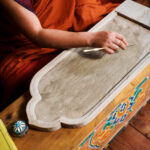
- The Institute for Zorig Chusum: the government school for the thirteen traditional arts, where a cultural transmission policy looks like a room full of young people learning to paint
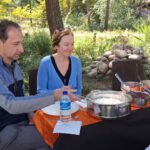
- A farmer's lunch in the upper Punakha valley — no programme, no talking points, just the household and the meal
- Punakha Dzong at the river confluence, built in 1637 and still functioning as both fortress and monastery
- The National Memorial Chorten at first light: the city's daily circumambulation as a form of collective wellbeing practice
- Tiger's Nest — the monastery above the 900-metre cliff that makes the concept of protected sacred landscape physically legible
Sample itineraries
-
Day 1 Arrive Paro. Thimphu by evening.
Land at Paro International Airport on the morning flight. Our team meets you and we drive east to Thimphu, one hour along the Wang Chhu river valley. Check in, then a slow walk around the Memorial Chorten neighbourhood to begin orienting. Dinner in Thimphu.
-
Day 2 Thimphu. The Memorial Chorten and the city.
We begin at the National Memorial Chorten at first light — thousands of Bhutanese walking the circumambulation path before their working day begins. This is not a tourist sight; it is a practice, and watching it tells you something about collective wellbeing that no policy document can. Then Tashichho Dzong from the riverside: the government fortress and monastic seat together in one building. Lunch in the city. Afternoon free — the weekend market if it falls on a Saturday, or the Institute for Zorig Chusum where young Bhutanese train in the thirteen traditional arts. Dinner at the hotel.
-
Day 3 Thimphu. The GNH Commission.
In the morning we visit the Gross National Happiness Commission — the government office that administers the index, designs the five-yearly survey, and advises on policy alignment. We have arranged a conversation with a researcher there who works on the measurement side: what the nine domains actually track, where the methodology is debated internally, and what it has and has not changed. This is not a public tour. It is a private conversation for guests who want to understand the framework rather than receive the brochure version. Lunch in Thimphu. Afternoon at the Institute for Zorig Chusum if not visited yesterday — the policy and its outcome, in the same day.
-
Day 4 Thimphu to Punakha. Dochu La and the river valley.
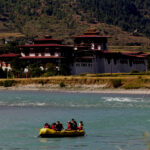
Drive over the Dochu La pass at 3,116 metres and down into Punakha. Stop at Chimi Lhakhang on the hillside above the farmland. Walk across the cantilever bridge over the Mo Chhu into Punakha Dzong — built in 1637 at the confluence of two rivers, still the winter residence of the Je Khenpo and his monk body. Dinner by the river.
-
Day 5 Punakha. The farming household.
We drive up the Punakha valley in the morning to a farming household in the upper reaches, above the main road. The family grows rice, chillies, and vegetables on terraced fields above the river. We arrive before lunch and sit with whoever is home — the conversation goes where it goes. The family is not performing for visitors; they are a farming family who have agreed to share a meal. Lunch from their kitchen. In the afternoon we walk the river path below Punakha Dzong and take a boat trip up the Mo Chhu. Dinner at the hotel.
-
Day 6 Punakha to Paro. Return through Thimphu.
Drive back over the Dochu La and through Thimphu to Paro. A short stop in Thimphu if there is something unfinished — the market, a bookshop, a temple you passed earlier in the week. Check in to the Paro hotel by late afternoon. Dinner in the valley.
-
Day 7 Paro. Tiger's Nest.
The walk to Taktsang is three hours at a measured pace. The monastery above the cliff is not a metaphor for Bhutan's relationship to development — it is genuinely there, genuinely ancient, genuinely inaccessible by any method other than walking. That fact becomes more meaningful after the week you have had. Lunch at a farmhouse below the trail. Afternoon free.
-
Day 8 Depart Paro.
Breakfast at the hotel. Our team drives you to Paro International Airport for your morning flight. We send a postcard from Thimphu after you leave.
-
Day 1 Arrive Paro. Thimphu by evening.
Land at Paro on the morning flight. Drive to Thimphu, one hour east. Check in, walk the Memorial Chorten neighbourhood. Dinner in Thimphu.
-
Day 2 Thimphu. The Memorial Chorten and the city.
First light at the National Memorial Chorten. Then Tashichho Dzong from the riverside. Lunch in the city. Afternoon at the Institute for Zorig Chusum.
-
Day 3 Thimphu. The GNH Commission.
Morning conversation at the GNH Commission — the nine domains, the five-yearly survey, the policy alignment work. Lunch in Thimphu. Afternoon free.
-
Day 4 Thimphu to Punakha. The river valley.
Drive over the Dochu La and down into Punakha. Stop at Chimi Lhakhang. Walk into Punakha Dzong across the cantilever bridge. Dinner by the Mo Chhu.
-
Day 5 Punakha. The farming household.
Morning drive to a farming household in the upper Punakha valley. Lunch from their kitchen. Afternoon walk along the river path below the dzong and a boat trip up the Mo Chhu.
-
Day 6 Punakha to Bumthang. The long drive east.
We drive east through Trongsa — stopping at Trongsa Dzong, the ancestral seat of the royal family, perched on a spur above the Mangde Chhu gorge — and on to Bumthang. The drive is long (six to seven hours with stops) and the landscape changes dramatically: the temperate valleys of the west give way to open, high-altitude terrain at 2,800 metres. Bumthang is the kingdom's cultural heartland, where the oldest temples stand and where the monks who serve them have been doing so in unbroken succession for centuries. Dinner at the hotel.
-
Day 7 Bumthang. Jakar valley and the old temples.
A full day in the Jakar valley — the main valley of the four that make up Bumthang. Morning at Kurjey Lhakhang, one of the holiest sites in Bhutan: three temples built over eight centuries around the rock that bears the body print of Guru Rinpoche. Then Jambay Lhakhang, founded in the 7th century by the Tibetan king Songtsen Gampo as one of 108 temples built simultaneously across the Himalayan region. Lunch in the valley. Afternoon walk to Tamshing Goemba, where the oldest surviving textile thangkas in Bhutan are kept.
-
Day 8 Bumthang to Paro. Return west.
We drive back through Trongsa and the Pelela pass and on through Punakha and Thimphu to Paro. Another long drive, but the road is the same one the monks and farmers have been using for centuries — and the landscape reads differently now than it did on the way east. Check in to the Paro hotel by evening. Dinner in the valley.
-
Day 9 Paro. Tiger's Nest.
Three hours up to Taktsang at a measured pace. The monastery above the 900-metre cliff. After everything you have seen this week, the scale of the ascent feels appropriate. Lunch at a farmhouse below the trail. Afternoon free.
-
Day 10 Depart Paro.
Breakfast at the hotel. Our team drives you to Paro International Airport. We send a postcard from Thimphu after you leave.
What is included
All accommodation, on the basis described per day
Private vehicle and licensed driver throughout
Licensed Bhutanese guide throughout
Arranged conversation at the GNH Commission, Thimphu
Farmhouse lunch in the Punakha valley
All meals (breakfast, lunch, dinner)
All permits and entry fees
Sustainable Development Fee (SDF)
24-hour in-country support
What is not included
International flights to Paro
Visa fee (USD 40)
Travel insurance
Personal expenses, tipping, drinks at meals
Optional experiences (browse and add to your wishlist)
What your journey gives back.
Bhutan is a carbon negative kingdom, where more than 70 percent of the land is covered in forests and the rivers remain clean and alive. The Sustainable Development Fee supports free healthcare, free education, and the protection of this extraordinary place.
This is not a tax. It is a shared commitment to preserve Bhutan for every generation that follows.
By visiting, you are not a tourist. You are a co-guardian of this kingdom.
Ready when you are.
Tell us roughly when you would like to come and how many you are. Our team in Thimphu will reply personally within 24 hours.
Plan this journey with our team