In the Footsteps of Drukpa Kunley
The fifteenth century monk who drank too much, loved freely, and is still the most beloved saint in Bhutan.
Why we created this journey
Every journey we design starts with a question rather than an itinerary. What is the one thing about this part of Bhutan that someone should understand before they leave? The places and the days follow from that question, not the other way around.
We do not build journeys by stringing together famous sights. We build them by thinking about who the traveller is, what they will notice, and what they will carry home with them. That takes longer. We think it is worth it.
Moments you may remember
- Watching first light reach the valley before anyone else is awake
- A conversation that runs longer than the meal
- An afternoon with nowhere particular to be
- The sound of a river you did not know you needed to hear
- A handwritten postcard arriving after you have returned home
This journey may suit you if
- You prefer a few places experienced well over many places ticked off
- You are more interested in how people live than in how many temples you visit
- You value time and space in your travels
- You do not want to change hotels every night
- You are comfortable at a slower pace and find that pace more rewarding
From USD 350 per person per day for groups of 2, fully inclusive of accommodation, private vehicle and licensed guide, all meals, permits, SDF, and 24-hour support. Rates are tailored to your group. Customised to fit you.
Highlights of this journey
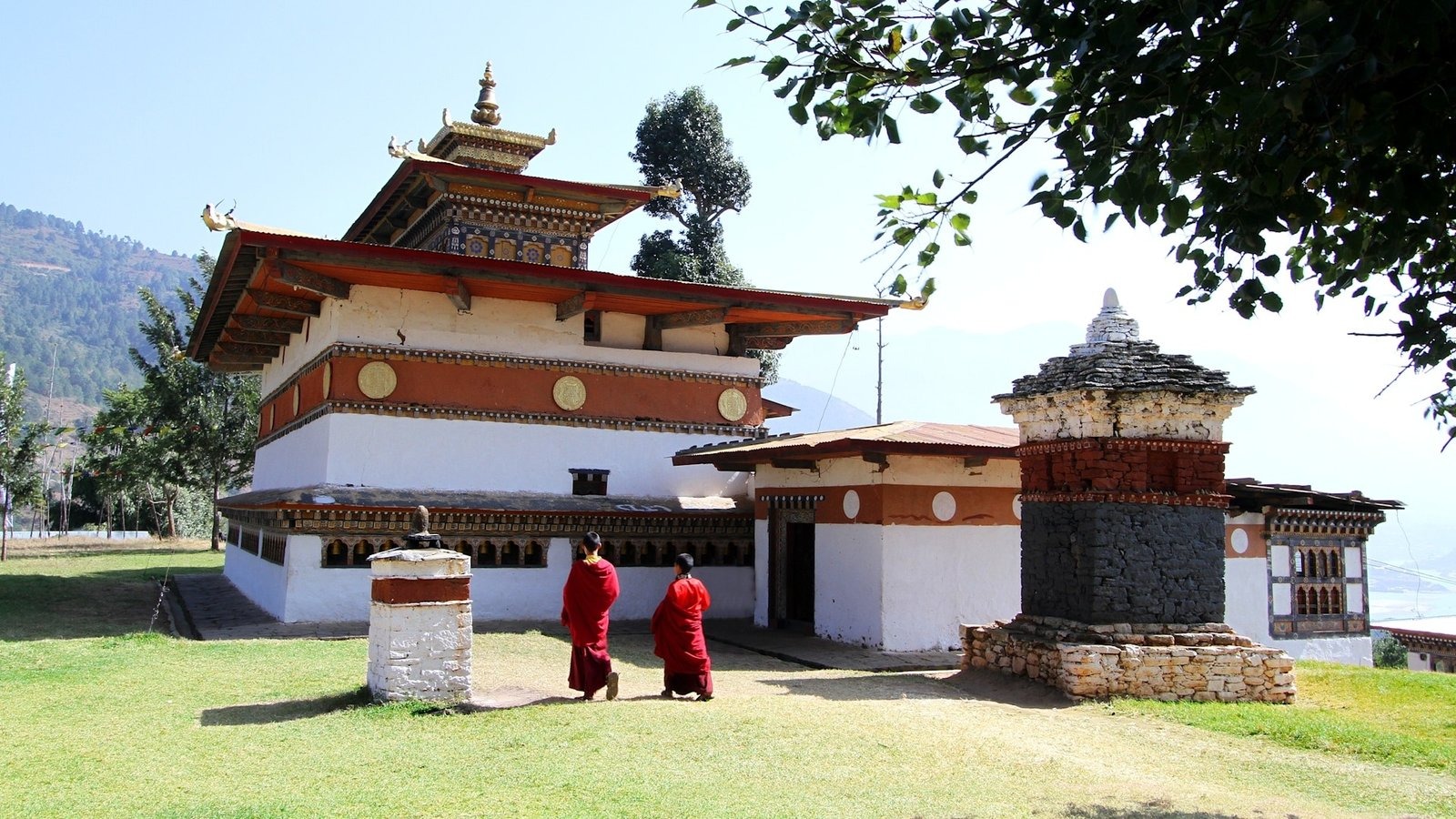
- Chimi Lhakhang in Punakha: the fertility temple built on the hill where Drukpa Kunley subdued the Demoness of Dochu La — reached by a walk through mustard fields and farm compounds
- Kurjey Lhakhang in Bumthang: three temples across eight centuries at the site most associated with Guru Rinpoche and later with Drukpa Kunley's teaching in the eastern valleys
- Tachog Lhakhang in Paro: a temple on a rock in the Paro Chhu river, reached by one of the original iron chain bridges built by Tangtong Gyalpo in the 15th century
- The phallus murals of Punakha: Bhutanese farmhouses painted with the protective symbol of Drukpa Kunley — explained by a guide who grew up with them on the walls of their own home
- A conversation with a village elder in the Punakha valley about what Drukpa Kunley means locally, off the scriptural record
- Tiger's Nest — the monastery above the cliff where Guru Rinpoche landed on the back of a tigress, the founding act of the tradition Drukpa Kunley inherited
Sample itineraries
-
Day 1 Arrive Paro. Thimphu by evening.
Land at Paro International Airport on the morning flight. Our team meets you and we drive east to Thimphu, one hour along the Wang Chhu river. Check in. Short walk near the Memorial Chorten to settle in. Dinner in Thimphu.
-
Day 2 Thimphu to Punakha. The Dochu La and Chimi Lhakhang.
We drive over the Dochu La pass at 3,116 metres. According to the tradition, the Demoness of Dochu La was one of Drukpa Kunley's most famous adversaries he subdued her somewhere on this ridge. We stop for the view, then descend into Punakha. Before checking in we walk to Chimi Lhakhang: fifteen minutes through mustard fields and farm compounds to the temple on the hill where Drukpa Kunley subdued the demoness with his 'flaming thunderbolt of wisdom' — the fertility symbol that appears on farmhouse walls throughout Bhutan originates here. The monks will explain what the pilgrims come seeking and why the explanations are taken seriously. Check in to the hotel. Dinner by the river.
-
Day 3 Punakha. The valley and the phallus murals.
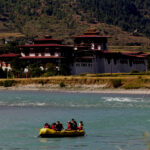
A morning walk through the Punakha valley farmhouses — the paintings on the external walls are not decorative; they are protective, and their presence is matter-of-fact in a way that requires context to read correctly. Your guide grew up near here and explains the imagery from the inside rather than the outside. Then Punakha Dzong itself: the most beautiful dzong in Bhutan, at the river confluence, built in 1637 — a century and a half after Drukpa Kunley walked through. Lunch in the valley. Afternoon on the Mo Chhu river by boat. Dinner at the hotel.
-
Day 4 Punakha to Thimphu. The Memorial Chorten.
We drive back over the Dochu La to Thimphu. Afternoon at the National Memorial Chorten — built in 1974 by the royal grandmother in memory of the third king, it is the centre of Thimphu's daily devotional life. The circumambulation path is walked by thousands every morning. Dinner in the city.
-
Day 5 Thimphu to Paro. Tachog Lhakhang.
We drive west to Paro and stop, before check-in, at Tachog Lhakhang — a temple on a rock in the middle of the Paro Chhu river, reached by one of the original iron chain bridges built by Tangtong Gyalpo in the 15th century. Tangtong Gyalpo was a contemporary of Drukpa Kunley and shared his unconventional approach: he built 58 iron chain bridges across Tibet and Bhutan, funded by a travelling opera company he invented, to make sacred sites accessible to pilgrims. The bridge sways. The river runs fast below. The temple on the rock is small and very old. Check in to the Paro hotel. Dinner in the valley.
-
Day 6 Paro. Tiger's Nest.
The walk to Taktsang is three hours at a measured pace. Guru Rinpoche arrived at this cliff face in the 8th century on the back of a tigress — a founding act of the tradition that Drukpa Kunley inherited seven centuries later. The monastery built above the cave is from 1692; the cave itself is much older. We arrive in the morning when the light comes in from the valley. Lunch at a farmhouse below the trail. Afternoon free.
-
Day 7 Paro valley. Rinpung Dzong and the last afternoon.
A slow morning in the Paro valley. We walk across the cantilever bridge to Rinpung Dzong and up to the watchtower above — the view west toward Tibet on a clear day. Lunch in Paro town. The afternoon is yours: a local weaver's workshop, the dzong again in the late light, or simply the valley. Last dinner together.
-
Day 8 Depart Paro.
Breakfast at the hotel. Our team drives you to Paro International Airport for your morning flight. We send a postcard from Thimphu after you leave.
-
Day 1 Arrive Paro. Thimphu by evening.
Land at Paro on the morning flight. Drive to Thimphu, one hour east. Check in. Short walk near the Memorial Chorten. Dinner in Thimphu.
-
Day 2 Thimphu to Punakha. Dochu La and Chimi Lhakhang.
Drive over the Dochu La — the demoness ridge, the 108 chortens — and down into Punakha. Walk through the mustard fields to Chimi Lhakhang on the hill. The monks explain the pilgrims and their intentions. Check in to the hotel. Dinner by the river.
-
Day 3 Punakha. The valley and the phallus murals.
Morning walk through the farmhouses with your guide explaining the wall paintings from the inside. Then Punakha Dzong at the river confluence. Lunch in the valley. Afternoon boat trip up the Mo Chhu.
-
Day 4 Punakha to Bumthang. Through Trongsa.
Drive east through Trongsa — stop at the dzong on its spur above the gorge — and on through the Pelela pass into Bumthang at 2,800 metres. Dinner at the hotel.
-
Day 5 Bumthang. Kurjey Lhakhang.
We spend the morning at Kurjey Lhakhang — the temple complex built around the rock that bears Guru Rinpoche's body print from the 8th century. Three temples built over eight centuries at the same site: the oldest, smallest, and most sacred is the cave chamber itself. Drukpa Kunley taught in this valley and the memory of both figures is present here simultaneously. Then Jambay Lhakhang nearby — 7th century, still inhabited, courtyard walls intact. Lunch in the Jakar valley. Afternoon walk along the Chamkhar Chhu river.
-
Day 6 Bumthang. Tamshing and the Jakar valley.
Tamshing Goemba — founded by Pema Lingpa in the 15th century, Drukpa Kunley's contemporary, another figure in the tradition of unconventional realisation. The oldest textile thangkas in Bhutan hang in the lower assembly hall. Then a slow walk through the Jakar valley: apricot orchards, buckwheat, the smell of the place at altitude. Farmhouse lunch. Free afternoon.
-
Day 7 Bumthang to Thimphu. The long return begins.
Drive back west through Trongsa and the passes to Thimphu. A full day on the road with stops. Lunch en route. Check in to the Thimphu hotel by evening. Dinner in the city.
-
Day 8 Thimphu to Paro. Tachog Lhakhang.
Drive west to Paro, stopping at Tachog Lhakhang on the way — the temple on the rock in the Paro Chhu, reached by Tangtong Gyalpo's iron chain bridge. The bridge sways; the river runs fast below. Check in to the Paro hotel. Dinner in the valley.
-
Day 9 Paro. Tiger's Nest.
Three hours up to Taktsang. Guru Rinpoche's cave, the 8th-century founding act that Drukpa Kunley inherited. Morning light in the valley. Lunch at a farmhouse below the trail. Afternoon free.
-
Day 10 Paro valley. Rinpung Dzong and the last afternoon.
Slow morning across the cantilever bridge to Rinpung Dzong and the watchtower above. Lunch in Paro town. Last afternoon in the valley — a weaver's workshop, the dzong again in late light, or simply the river. Last dinner together.
-
Day 11 Depart Paro.
Breakfast at the hotel. Our team drives you to Paro International Airport. We send a postcard from Thimphu after you leave.
What is included
All accommodation, on the basis described per day
Private vehicle and licensed driver throughout
Licensed Bhutanese guide throughout
All meals (breakfast, lunch, dinner)
All permits and entry fees
Sustainable Development Fee (SDF)
24-hour in-country support
What is not included
International flights to Paro
Visa fee (USD 40)
Travel insurance
Personal expenses, tipping, drinks at meals
Optional experiences (browse and add to your wishlist)
What your journey gives back.
Bhutan is a carbon negative kingdom, where more than 70 percent of the land is covered in forests and the rivers remain clean and alive. The Sustainable Development Fee supports free healthcare, free education, and the protection of this extraordinary place.
This is not a tax. It is a shared commitment to preserve Bhutan for every generation that follows.
By visiting, you are not a tourist. You are a co-guardian of this kingdom.
Ready when you are.
Tell us roughly when you would like to come and how many you are. Our team in Thimphu will reply personally within 24 hours.
Plan this journey with our team