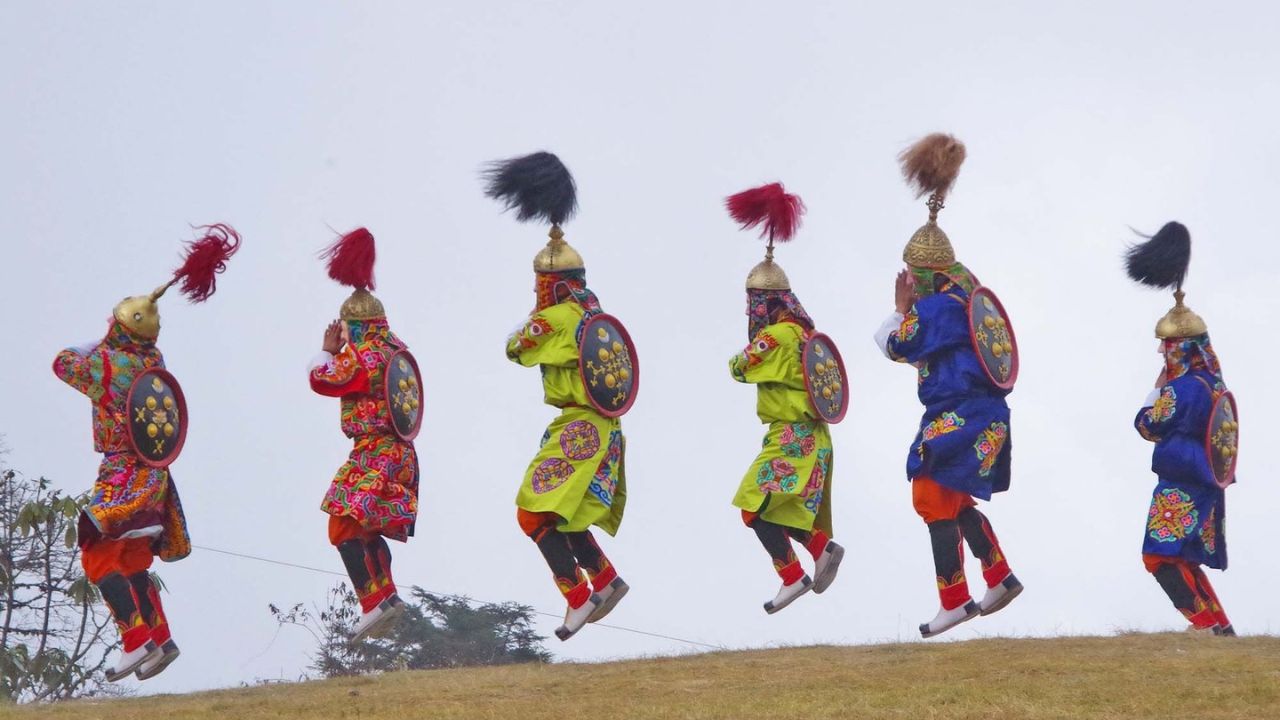
Druk Wangyel Tshechu
A winter tshechu at 3,116 metres, with the entire Himalayan range visible north of the stage.
Why we created this journey
Every journey we design starts with a question rather than an itinerary. What is the one thing about this part of Bhutan that someone should understand before they leave? The places and the days follow from that question, not the other way around.
We do not build journeys by stringing together famous sights. We build them by thinking about who the traveller is, what they will notice, and what they will carry home with them. That takes longer. We think it is worth it.
Moments you may remember
- Watching first light reach the valley before anyone else is awake
- A conversation that runs longer than the meal
- An afternoon with nowhere particular to be
- The sound of a river you did not know you needed to hear
- A handwritten postcard arriving after you have returned home
This journey may suit you if
- You prefer a few places experienced well over many places ticked off
- You are more interested in how people live than in how many temples you visit
- You value time and space in your travels
- You do not want to change hotels every night
- You are comfortable at a slower pace and find that pace more rewarding
From USD 350 per person per day, fully inclusive of accommodation, private vehicle and licensed guide, all meals, permits and SDF.
Highlights of this journey
- The Druk Wangyel Tshechu at the Dochu La — cham dances on a high-pass stage with 108 chortens and the entire eastern Himalayan range visible north on a clear December morning
- Attendance by the Bhutanese royal family — a ceremony that carries both religious and national significance unlike any other tshechu in the calendar
- Punakha Dzong in winter: the jacaranda trees bare, the white walls reflecting in the two rivers, the dzong at its quietest and most austere
- December light in Bhutan: post-harvest, cold, and transparent above 3,000 metres — a quality of clarity that the spring and autumn crowds never experience
- The Dochu La ridge walk in winter: 108 chortens in the bare rhododendron forest, the mountains north, the two valleys south
- A private journey through the Thimphu and Punakha valleys in the low season — the same places, different in every way from what they are in the festival months
Sample itineraries
-
Day 1 Arrive Paro. Drive to Thimphu.
Land at Paro International Airport. We drive to Thimphu — one hour along the Wang Chhu river, the valley in its December state: the paddy fields cut and dry, the hillsides the colour of oak in autumn. Check in to the hotel, afternoon walk above the city. December Thimphu is noticeably quieter than the festival months. Dinner at the hotel.
-
Day 2 Thimphu. The city in winter.
A morning in Thimphu without a festival agenda: the National Memorial Chorten at first light, the Tashichho Dzong before the offices open, the weekend market if the timing allows. Afternoon: the Zorig Chusum Institute of the Thirteen Traditional Arts, where the classes are still running in December and the students are midway through multi-month projects — embroidery, thangka painting, woodcarving. The work visible at this stage of a project tells you more than the finished pieces. Dinner in Thimphu.
-
Day 3 Dochu La. Pre-festival walk. Drive to Punakha.
We drive over the Dochu La in the morning, the day before the tshechu, to walk the ridge without the festival crowd. The 108 chortens in the bare rhododendron forest in December have a different character from the flowering months — starker, more legible as architecture. An hour on the ridge, then we descend into the Punakha valley. Lunch in Punakha. Afternoon at Punakha Dzong: the dzong in winter, with the jacaranda trees bare and the Mo Chhu running low and clear. Dinner at the hotel.
-
Day 4 Druk Wangyel Tshechu. 13 December.
We drive back over the Dochu La before the festival begins. The cham dances open at the Druk Wangyel Lhakhang: masked dancers in the courtyard of the new lhakhang, the 108 chortens east and west of the stage, and on a clear morning the Himalayan range north — Masagang, Tsendagang, Terigang — standing above the dances as a permanent backdrop that no architect designed. The royal family attends; the ceremony carries a weight that the more tourist-frequented tshechua have partially lost. We stay for the full programme, which ends in the early afternoon, then drive back to Punakha for the night.
-
Day 5 Punakha. The valley the day after.
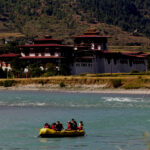
A quiet day in the Punakha valley with no festival agenda. Morning walk on the valley floor — the suspension bridge over the Mo Chhu, north along the bank to where the two rivers meet below the dzong. The confluence in December, the water low and cold and the dzong above it. Lunch by the river. Afternoon boat trip up the Mo Chhu if the water allows, or a drive to the Khamsum Yulley Namgyal Chorten on the hill above the north bank. Dinner at the hotel.
-
Day 6 Punakha to Paro. Depart.
We drive over the Dochu La and through Thimphu to Paro. The pass in the morning after the festival is quiet again. Our team drives you to Paro International Airport for your flight.
-
Day 1 Arrive Paro. Drive to Thimphu.
Land at Paro. Drive to Thimphu. Check in, afternoon walk above the city. December Thimphu in its quietest month. Dinner at the hotel.
-
Day 2 Thimphu. The city in winter.
The National Memorial Chorten at first light. The Zorig Chusum institute. The weekend market if timing allows. The city without a festival: quieter, more itself.
-
Day 3 Dochu La ridge walk. Drive to Punakha.
Walk the Dochu La ridge among the 108 chortens the day before the festival. Bare rhododendrons, the Himalayan panorama north. Then down into the Punakha valley. Punakha Dzong in winter.
-
Day 4 Druk Wangyel Tshechu. Festival day.
Drive back over the Dochu La for the tshechu. Cham dances at the Druk Wangyel Lhakhang, the 108 chortens flanking the stage, the Himalayan range visible north. Royal family in attendance. Full day at the festival, then return to Punakha.
-
Day 5 Punakha. Valley day.
Morning walk on the valley floor. The Mo Chhu and Pho Chhu confluence below the dzong in winter. Lunch by the river. Afternoon boat trip or Khamsum Yulley Namgyal Chorten. Dinner at the hotel.
-
Day 6 Punakha to Paro. Depart.
Drive over the Dochu La and through Thimphu to Paro. Airport transfer. December light on the Paro valley on the way in.
What is included
All accommodation, on the basis described per day
Private vehicle and licensed driver throughout
Licensed Bhutanese guide throughout
All meals (breakfast, lunch, dinner)
Druk Wangyel Tshechu entry and all permits
Sustainable Development Fee (SDF)
24-hour in-country support
What is not included
International flights to Paro
Visa fee (USD 40)
Travel insurance
Personal expenses, tipping, drinks at meals
What your journey gives back.
Bhutan is a carbon negative kingdom, where more than 70 percent of the land is covered in forests and the rivers remain clean and alive. The Sustainable Development Fee supports free healthcare, free education, and the protection of this extraordinary place.
This is not a tax. It is a shared commitment to preserve Bhutan for every generation that follows.
By visiting, you are not a tourist. You are a co-guardian of this kingdom.
Ready when you are.
Tell us roughly when you would like to come and how many you are. Our team in Thimphu will reply personally within 24 hours.
Plan this journey with our team