Punakha Drubchen and Tshechu
The river dzong in winter light, and a war fought again every year for four hundred years.
Why we created this journey
Every journey we design starts with a question rather than an itinerary. What is the one thing about this part of Bhutan that someone should understand before they leave? The places and the days follow from that question, not the other way around.
We do not build journeys by stringing together famous sights. We build them by thinking about who the traveller is, what they will notice, and what they will carry home with them. That takes longer. We think it is worth it.
Moments you may remember
- Watching first light reach the valley before anyone else is awake
- A conversation that runs longer than the meal
- An afternoon with nowhere particular to be
- The sound of a river you did not know you needed to hear
- A handwritten postcard arriving after you have returned home
This journey may suit you if
- You prefer a few places experienced well over many places ticked off
- You are more interested in how people live than in how many temples you visit
- You value time and space in your travels
- You do not want to change hotels every night
- You are comfortable at a slower pace and find that pace more rewarding
From USD 350 per person per day for groups of 2, fully inclusive of accommodation, private vehicle and licensed guide, all meals, permits, SDF, and 24-hour support. Rates are tailored to your group. Customised to fit you.
Highlights of this journey
- Punakha Dzong at the river confluence — the most beautiful dzong in Bhutan, reached by a wooden cantilever bridge
- The Drubchen: a 400-year-old war re-enactment performed in full period dress in the dzong courtyard, unlike any other ceremony in the kingdom
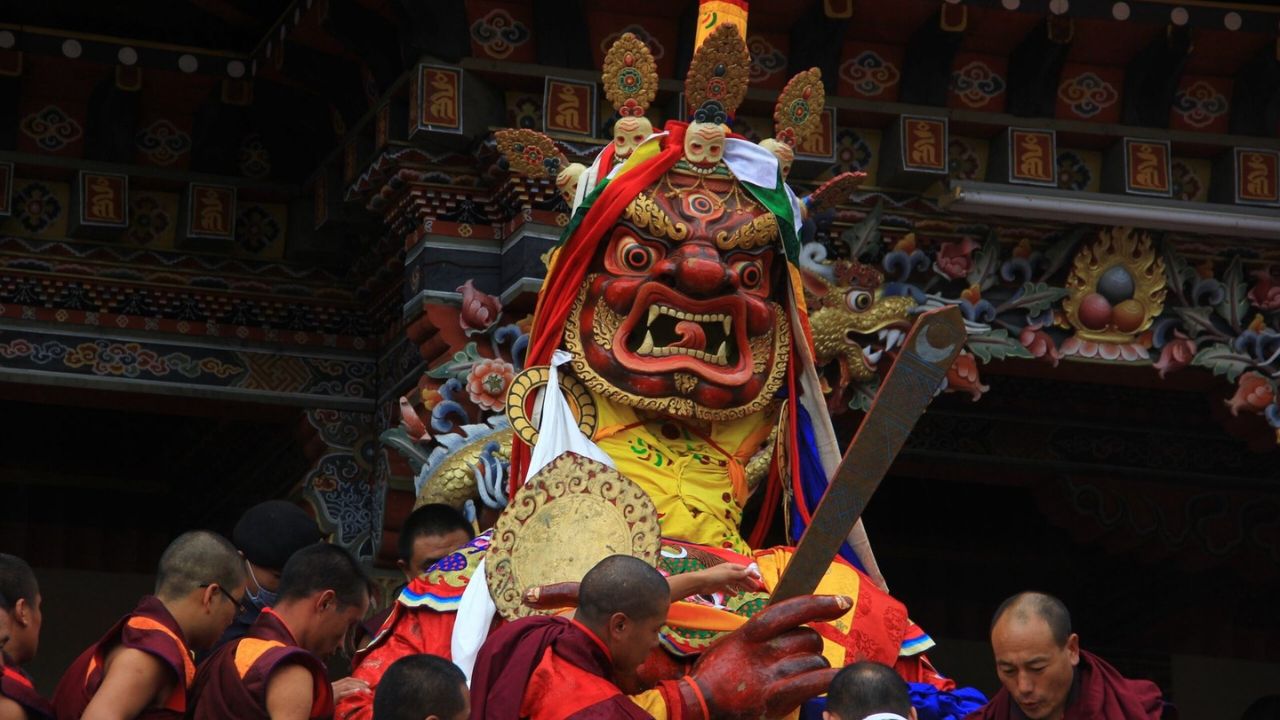
- Three mornings of cham dances at the Tshechu — masks, silk, drumming that begins before dawn
- The dzong on a quiet morning after the festival, when it belongs to the monks again
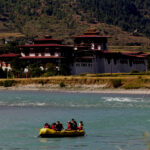
- A boat trip up the Mo Chhu to a village where traditional farmhouse weaving still happens in the ground-floor rooms
- The Punakha valley in spring — mustard fields, white chortens, the mountains of Gasa district north of the river
Sample itineraries
-
Day 1 Arrive Paro. Thimphu by evening.
Land at Paro International Airport on the morning Drukair flight. Our team meets you at the gate and we drive east to Thimphu — roughly an hour along the Wang Chhu river valley. Check in to your hotel, then a slow afternoon in the capital: the weekend market if the timing aligns, or simply the streets around the Tashichho Dzong as the day winds down. Dinner in Thimphu.
-
Day 2 Thimphu to Punakha. Arrival at the river dzong.
After breakfast we drive the Dochu La pass — at 3,116 metres, with 108 chortens on the ridge and Himalayan peaks north of the cloud line on a clear day — then descend into Punakha. The valley opens below you as you come down, wide and warm and green in a way Thimphu is not. Stop at Chimi Lhakhang, the fertility temple on a small hill above the farmland, before arriving at the dzong. The bridge over the Mo Chhu is narrow enough that you cross it on foot. We walk into the courtyard and you see where the next four days will happen. Dinner by the river.
-
Day 3 The Drubchen. A war four hundred years old.
We arrive at Punakha Dzong in the morning. The Drubchen re-enacts the 1639 battle in which Zhabdrung Ngawang Namgyal and his forces repelled a Tibetan and Mongolian invasion. Monks dressed as 17th-century soldiers, cavalry in armour, the central courtyard as the battlefield. It is loud and physical and completely unlike a dance ceremony — the energy in the crowd is different, more electric, with a pride in it that belongs specifically to Bhutanese people watching their own history performed. We stay for the main sequence, then have lunch in the valley. Afternoon free at the hotel.
-
Day 4 First morning of the Tshechu.
The Drubchen is over; the Tshechu begins. We return to the dzong before the gates open. The courtyard is familiar now — you have your bearings from yesterday — and the shift from battle drama to sacred dance is striking. The opening dances include the Sha Marpo, performed by monks who learned it as boys and have performed it every year since. We stay through midday. Long lunch, then an afternoon boat trip up the Mo Chhu to a weaving village — women working at floor looms in the ground-floor rooms of their farmhouses, the same patterns they have been weaving since before the roads came.
-
Day 5 Second and third morning of the Tshechu.
Another early start. Today the dzong is fullest — local families from across Punakha and Wangdue Phodrang come in their finest kira and gho for the middle days of the tshechu. The dances include the Peling Ging and Tshokling and the Dance of the Lords of the Cremation Grounds. We stay longer today and let the rhythm of the ceremony find you. Lunch in the dzong compound with the crowd still around us. Free afternoon.
-
Day 6 The dzong in silence. Punakha valley.
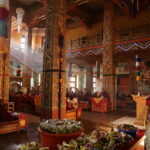
The tshechu is finished. The monks have gone back to their duties; the dzong belongs to itself again. We go in the morning, when the courtyards are empty and the light comes down from the clerestory windows into the central tower. Your guide walks you through the rooms that are normally inaccessible during the festival — the main assembly hall, the altar chamber, the Zhabdrung's sanctuary at the rear. Then a slow afternoon in the valley: the mustard fields north of the dzong, the chortens on the ridge above Lobesa, or simply the hotel terrace with the river below. Dinner unhurried.
-
Day 7 Punakha to Paro. Departure.
We drive back through the Dochu La in the morning — often clear at this hour, the 108 chortens and the Himalayan horizon before you — then continue west through Thimphu to Paro International Airport. Our team stays with you until you are through the gate. We send a postcard from Thimphu after you leave.
-
Day 1 Arrive Paro. Thimphu by evening.
Land at Paro on the morning flight. Our team meets you and we drive east to Thimphu, one hour along the Wang Chhu river valley. Slow afternoon in the capital. Dinner in Thimphu.
-
Day 2 Thimphu to Punakha. Arrival at the river dzong.
Drive over Dochu La — 108 chortens, Himalayan peaks north of the cloud line — and down into the Punakha valley. Stop at Chimi Lhakhang on the hillside above the farmland. Cross the cantilever bridge over the Mo Chhu into the dzong on foot. Dinner by the river.
-
Day 3 The Drubchen.
The 1639 battle re-enacted inside the dzong courtyard. Monks in armour, cavalry, the whole fortress as the stage. Lunch in the valley, afternoon at the hotel.
-
Day 4 First morning of the Tshechu.
The cham dances begin. We have our position in the courtyard before the gates open. The Sha Marpo and the opening dances in morning light. Afternoon boat trip up the Mo Chhu to a weaving village.
-
Day 5 Second and third morning of the Tshechu.
The dzong at its fullest — families from across Punakha and Wangdue in their finest clothes. The Peling Ging and the Dance of the Lords of the Cremation Grounds. A long lunch in the compound with the crowd still around us.
-
Day 6 The dzong in silence. Punakha valley.
Empty courtyards, open rooms, morning light through the clerestory. Your guide walks you through the assembly hall and the Zhabdrung's sanctuary. A slow afternoon in the valley before the last dinner.
-
Day 7 Punakha to Paro. Departure.
Drive back over Dochu La and west through Thimphu to Paro International Airport. Our team stays with you until you are through the gate.
What is included
All accommodation, on the basis described per day
Private vehicle and licensed driver throughout
Licensed Bhutanese guide throughout
All meals (breakfast, lunch, dinner)
All permits and entry fees, including festival entry
Sustainable Development Fee (SDF)
24-hour in-country support
What is not included
International flights to Paro
Visa fee (USD 40)
Travel insurance
Personal expenses, tipping, drinks at meals
Optional experiences (browse and add to your wishlist)
What your journey gives back.
Bhutan is a carbon negative kingdom, where more than 70 percent of the land is covered in forests and the rivers remain clean and alive. The Sustainable Development Fee supports free healthcare, free education, and the protection of this extraordinary place.
This is not a tax. It is a shared commitment to preserve Bhutan for every generation that follows.
By visiting, you are not a tourist. You are a co-guardian of this kingdom.
Ready when you are.
Tell us roughly when you would like to come and how many you are. Our team in Thimphu will reply personally within 24 hours.
Plan this journey with our team