Abode of the Goddess — Jomolhari Trek
Through the Paro valley into the high Himalaya, to the base of a mountain that has never been climbed.
Why we created this journey
Every journey we design starts with a question rather than an itinerary. What is the one thing about this part of Bhutan that someone should understand before they leave? The places and the days follow from that question, not the other way around.
We do not build journeys by stringing together famous sights. We build them by thinking about who the traveller is, what they will notice, and what they will carry home with them. That takes longer. We think it is worth it.
Moments you may remember
- Watching first light reach the valley before anyone else is awake
- A conversation that runs longer than the meal
- An afternoon with nowhere particular to be
- The sound of a river you did not know you needed to hear
- A handwritten postcard arriving after you have returned home
This journey may suit you if
- You prefer a few places experienced well over many places ticked off
- You are more interested in how people live than in how many temples you visit
- You value time and space in your travels
- You do not want to change hotels every night
- You are comfortable at a slower pace and find that pace more rewarding
From USD 390 per person per day for groups of 2, fully inclusive of accommodation, private vehicle and licensed guide, all meals, permits, SDF, and 24-hour support. Rates are tailored to your group. Customised to fit you.
Highlights of this journey
- Jomolhari base camp at Jangothang, 4,080 metres — the mountain filling the northern horizon, unclimbed, unconquered, its name meaning exactly what it says
- The Jomolhari Wildlife Sanctuary: snow leopard territory, blue sheep on the high slopes, takin in the lower valley, black bear in the forest — one of the most biodiverse mountain ecosystems in Asia
- The Paro Chhu valley above the road — the river, the yak herders' camps, the ruined dzong at Jangothang that was old when the current dzong system was built
- The Thombu La pass at 4,890 metres in the extended variation — the highest point on any of our trekking routes
- Camping at altitude under the clearest skies in the country, with the Himalayan range visible from camp on both sides of the valley
- A fully private expedition: no other trekkers at your camps, the trail entirely your own
Sample itineraries
-
Day 1 Arrive Paro. Acclimatisation and preparation.
Arrive in Paro. Acclimatisation walk on the Tiger's Nest trail to 3,000 metres — the altitude is similar to the first two days of the trek and this day calibrates the body before the serious climbing begins. Gear check and briefing with the trekking guide. Dinner at the hotel.
-
Day 2 Trek Day 1. Drukgyel Dzong to Shana camp. (5–6 hours, camp at 2,870m)
We drive to Drukgyel Dzong at the far end of the Paro valley — the ruined fortress that once guarded the Tibet route — and begin on foot along the Paro Chhu river. The trail follows the northern bank through blue pine forest, crossing the river twice on wooden bridges. We enter the Jomolhari Wildlife Sanctuary at the checkpoint and camp at Shana, 2,870 metres. The first yak herders' camps are visible on the hillside above.
-
Day 3 Trek Day 2. Shana to Thangthangkha camp. (6–7 hours, camp at 3,610m)
The longest day on the route. We follow the Paro Chhu as the valley narrows and the walls close in above. The river is fast here and the sound of it carries through the entire day. Blue sheep are possible on the slopes above 3,000 metres. We camp at Thangthangkha, 3,610 metres, where the valley opens again and the first views of the Jomolhari range become visible to the north.
-
Day 4 Trek Day 3. Thangthangkha to Jangothang base camp. (5–6 hours, camp at 4,080m)
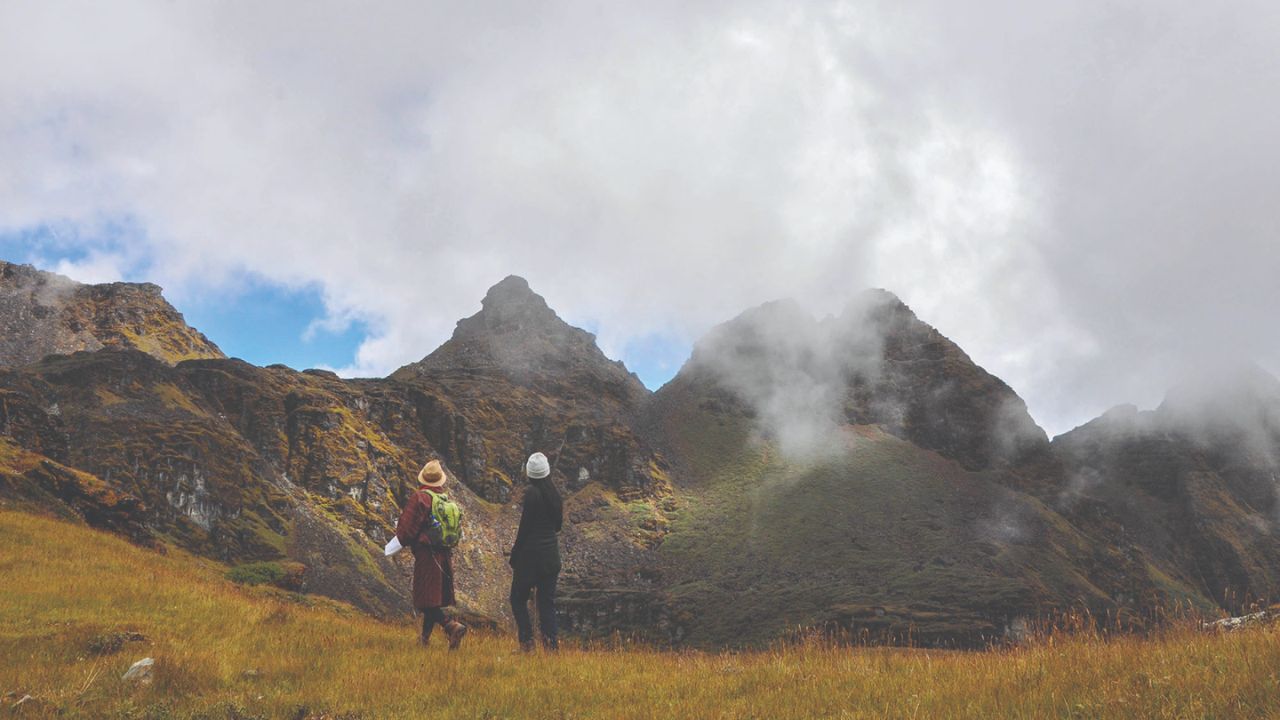
The approach to the mountain. The trail leaves the forest entirely and moves through open yak pasture above the river. Jomolhari becomes visible to the north as you gain altitude — white and sharp-edged, without the gradual reveal that other mountains allow. Base camp at Jangothang, 4,080 metres, below the old ruined dzong: a few stone walls on a knoll above the camp, built before the current administrative system existed. The mountain is directly north of the tent doorway. It fills the horizon.
-
Day 5 Rest day at Jangothang base camp.
A full day at the base of Jomolhari. Options: a high day-walk above camp toward the glacier to 4,500 metres, with blue sheep likely on the upper slopes and the possibility of snow leopard tracks in the scree; or a shorter walk to the ruined dzong above camp for the view down the valley you came up. Or nothing at all — a day at altitude under the mountain, watching the cloud move across the south face. The camp crew prepares a longer lunch. This is the day the journey is built around.
-
Day 6 Trek Day 4. Jangothang to Thangthangkha camp. Return begins. (5–6 hours)
We leave the mountain and walk back south down the same valley. It reads differently going down — the same river, the same walls, but now you are moving away from the mountain rather than toward it. Camp at Thangthangkha again.
-
Day 7 Trek Day 5. Thangthangkha to Shana camp. (5–6 hours)
Continue south through the narrow valley section. The river again, the blue pine forest, the yak herder camps. Camp at Shana. Last night in the tent.
-
Day 8 Trek Day 6. Shana to Drukgyel Dzong. Paro. (4–5 hours)
Final morning on foot, returning along the river to Drukgyel Dzong and the road. Our vehicle is waiting. Drive to the Paro hotel. Hot shower. The mountain is still visible from the valley floor to the north — the same white triangle above the ridgeline that you can see from the hotel terrace.
-
Day 9 Depart Paro.
Breakfast at the hotel. Our team drives you to the airport for your Drukair flight.
-
Day 1 Arrive Paro. Acclimatisation and preparation.
Arrive in Paro. Acclimatisation walk to 3,000 metres on the Tiger's Nest trail. Gear check and briefing. Dinner at the hotel.
-
Day 2 Trek Day 1. Drukgyel Dzong to Shana camp. (5–6 hours, 2,870m)
Begin at the ruined fortress, follow the Paro Chhu north through blue pine forest, enter the wildlife sanctuary, camp at Shana.
-
Day 3 Trek Day 2. Shana to Thangthangkha camp. (6–7 hours, 3,610m)
Long day following the narrowing valley north. Blue sheep above 3,000 metres. First views of the Jomolhari range from camp.
-
Day 4 Trek Day 3. Thangthangkha to Jangothang base camp. (5–6 hours, 4,080m)
Open yak pasture above the forest. The mountain reveals itself gradually then all at once. Base camp below the ruined dzong. Jomolhari north of the tent.
-
Day 5 Rest day at Jangothang base camp.
Day-walk above camp toward the glacier to 4,500 metres, or the ruined dzong, or stillness at base camp under the mountain. Blue sheep likely above camp. The day the trek is built around.
-
Day 6 Trek Day 4. Jangothang to Lingshi camp via Nyile La. (7–8 hours, pass 4,870m)
The loop begins. We climb the Nyile La pass at 4,870 metres — the highest point on the classic Jomolhari route — with Jomolhari behind us to the south and Jichu Drake ahead. The descent into the Lingshi valley is steep and long, ending at Lingshi Dzong, a small fortress at 4,010 metres in one of the most remote inhabited valleys in Bhutan. Camp below the dzong.
-
Day 7 Trek Day 5. Lingshi to Chebisa camp. (5–6 hours, 3,880m)
A shorter day through the Lingshi valley. The route passes yak herder camps and a small community of permanent residents — one of the highest inhabited places in Bhutan. Chebisa has a small waterfall above the camp and the possibility of blue sheep on the rocky slopes to the east.
-
Day 8 Trek Day 6. Chebisa to Shana camp via Thombu La. (7–8 hours, pass 4,890m)
The highest day on the loop. We climb the Thombu La at 4,890 metres — the highest point of any trek we offer — and descend steeply back into the Paro Chhu valley, joining the outward route at Shana. The views from the pass extend north into Tibet on a clear day.
-
Day 9 Trek Day 7. Shana to Drukgyel Dzong. Paro. (4–5 hours)
Final morning on foot along the river. Vehicle at the road. Drive to Paro. Hotel and hot shower. Jomolhari still visible to the north from the valley floor.
-
Day 10 Paro. Rest day before departure.
A full day in Paro to recover before flying home. No programme. Hot bath, a walk in the lower valley, Rinpung Dzong if the legs are willing. Dinner together — a final meal in the valley.
-
Day 11 Depart Paro.
Breakfast at the hotel. Our team drives you to the airport for your Drukair flight.
What is included
All accommodation (camping — high-quality tents and sleeping equipment)
Private vehicle transfers at start and end of trek
Licensed Bhutanese trekking guide throughout (with personal knowledge of the Jomolhari route)
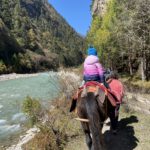
Dedicated camp crew (cook, kitchen assistants, horse handlers)
All meals on trek (breakfast, lunch, dinner, snacks, hot drinks)
All camping equipment (sleeping tents, kitchen tent, dining tent, toilet tent)
Jomolhari Wildlife Sanctuary permits and all trekking permits
Sustainable Development Fee (SDF)
24-hour in-country support
What is not included
International flights to Paro
Visa fee (USD 40)
Travel insurance (trekking coverage to 5,000m required)
Personal trekking equipment (warm layers, waterproofs, boots — packing list provided)
Personal expenses and tipping
From this journey
What your journey gives back.
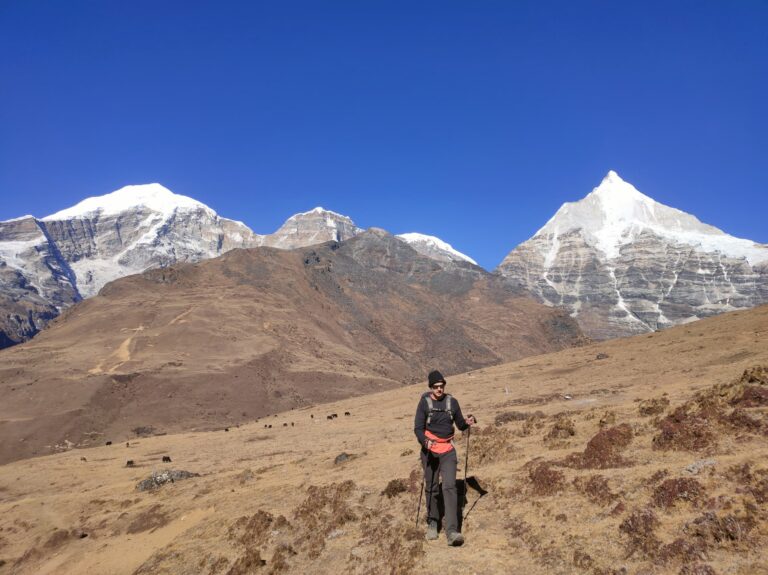
Bhutan is a carbon negative kingdom, where more than 70 percent of the land is covered in forests and the rivers remain clean and alive. The Sustainable Development Fee supports free healthcare, free education, and the protection of this extraordinary place.
This is not a tax. It is a shared commitment to preserve Bhutan for every generation that follows.
By visiting, you are not a tourist. You are a co-guardian of this kingdom.
Ready when you are.
Tell us roughly when you would like to come and how many you are. Our team in Thimphu will reply personally within 24 hours.
Plan this journey with our team